Day 20 — positive thinking while in lockdown

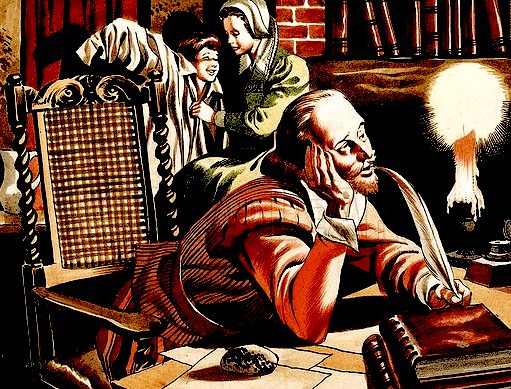
William Shakespeare writing at home

I was saving this idea for the 23rd (Shakespeare’s birthday/deathday/chose-your-own-anniversary-day) when I usually write something Shakey-related. Anyhoo this was an idea I thought I might explore then, but it poured out of me today, so we’ll just deal with it. (I do have another idea in reserve, or perhaps something entirely new will pop out.)

Also thanks to a poet whose work I hugely admire, as well as being a dear friend, for saying he’s been enjoying reading my poems. He was particularly kind about this year’s Easter Sunday poem saying it “abided with [him]” & it’s been returning to his mind often over the last few days. He’s even left it open in his browser to be able to come back to it. Thank you Tom. That means the absolute world to me. It often feels during this mad month that you’re writing in & to a vacuum; and that much of what gets created is pedestrian at best, or merely not-quite-average, so even if only one or two poems fire during the month, it feels like a success.

*****

Plague Lear 

i.
if, like me,your mediocrity valve is already open
full trickle then saccharine motivational memes
such as Shakespeare wrote Lear during the plague 

aren’t.   bloody.   helping.   one.   poxy.   bit.

ii.
well take a modicum of heart cos the reality is
Shakey dates are always shaky at best but Lear
probably doesn’t quite pass the jester test

sure, Lear was most likely written in 1606
it was entered into the Stationers’ Register that year
& contemporary events seem referenced within

yet 1606 wasn’t such a big deal as pandemics go
— most every year had a bitta Black Death — the Great Plague*
didn’t hit til 65 & the Sweet Swan was long gone

1603 was the go to year for things bubonic in Bill’s life
& all our country boy turned out then was (chortle)
Measure for Measure — yes, one of the “problem plays”

iii.
if you really want to feel insecure (& no doubt you do)
consider that 1606 might’ve been the year not only
of Lear — but Macbeth — & Antony & Cleopatra too

                                                     Bing.   Bang.   Boom!

.

.


*Between 1603 and 1665, only four years had no recorded cases of plague. 

The Great Plague of 1665-66 was actually the second plague to be so known; the first was in 1625 & was known as the Great Plague until it was surpassed in deaths by the “final” Great Plague.

Plague was par for the course for everyone in those days is what I’m saying.

Day 19 – turns out is semi-silly Sunday after all

19 wally

As with yesterday, poor health means I’m gonna double up on poems today too. I’m still sticking to theme though. So all good.

Here is the prompt from TheDirtyThirty2020 #day19.

“You’re a criminal mastermind leaving a note at one of your classic, non-murderous, white collar, victimless crime scenes. In the letter, you leave a secret, hidden message for a genius, wily investigator to find, hoping for a game of cat and mouse they’ll make a movie about one day. Write the letter you leave.”

Given the task was to leave a letter for an inspector to find I thought who’s the best inspector I know? Why Peter Sellers of course. To make things more interesting I thought I’d combine another character into the mix as the criminal. 

So here’s my letter from Where’s Wally to Inspector Clouseau.

*****

What’s Wally stolen?

Clouseau – you cannot catch me – I’ve left no clue
Or maybe I have – so beware – that clue’s untrue
Vanished I have – into the ether – into the air
Into here – into there – perhaps into everywhere

Disappearing in crowds is what I do best of all
– where’s that effing Wally? – I hear you chiding
1f you get really desperate you could always call
911, or 999, or 000, 112, 110 – depends where I’m hiding

Can you find me – can you guess what I’ve got
Unlikely I’d say – you’re too big a clot
Rest for a moment – no – you’d best not
Everyone in the world wants – what’s in my pot


(Note: I may not have obeyed every single adjectival prompt request.)

Day 18 – silly Sunday, but a day early

18. Rubysickly

Last week Silly Sunday was a day late, this week a day early. Next week will be the correct day I promise.

The reason I’m posting silly Sunday today is that the prompt for #TheDirtyThirty2020 (which I’m also doing this year, why, not sure, seemed an okay idea once upon a time) was limerick. For which I wrote two, both Coronavirus related. So in the efforts of saving time, energy, & getting back into bed sooner, I’m doubling up by posting here too. Technically since I wrote two limericks I’m covered anyway, but enough justification.

Also, what’s the record number of naps taken in one day? Asking for a friend.

*****

There once was a ship Ruby Princess
Whose arrival caused much distress
…..for most had a virus
…..but Dutton was desirous
At home they all should convalesce

There once was much talk of a curve
how now it’s flat we needn’t observe
…..cos we’re tired of inside
…..even if others must die
Which you gotta admit takes some kinda nerve

Day 17 — social isolation

17 jetty

Pretty self explanatory. Trying to play round with form & content.

*****

the distance we’ve been given

& then almost overnight
the whole world changed
& together we faced something
we hadn’t experienced before
(or at least not for a hundred years)

we learnt a new vocabulary
we  distanced  ourself  socially
we focussed on    curve   flattening
we  realised    remembered           perhaps
just           because        we’ve       doing
      something        for          a

few                  decades                                  doesn’t

mean                                                 we

need                                     to                                         keep


___________________________________doing


_____________it

__________________________________that

______________________________________________________way

Day 16 — sick day

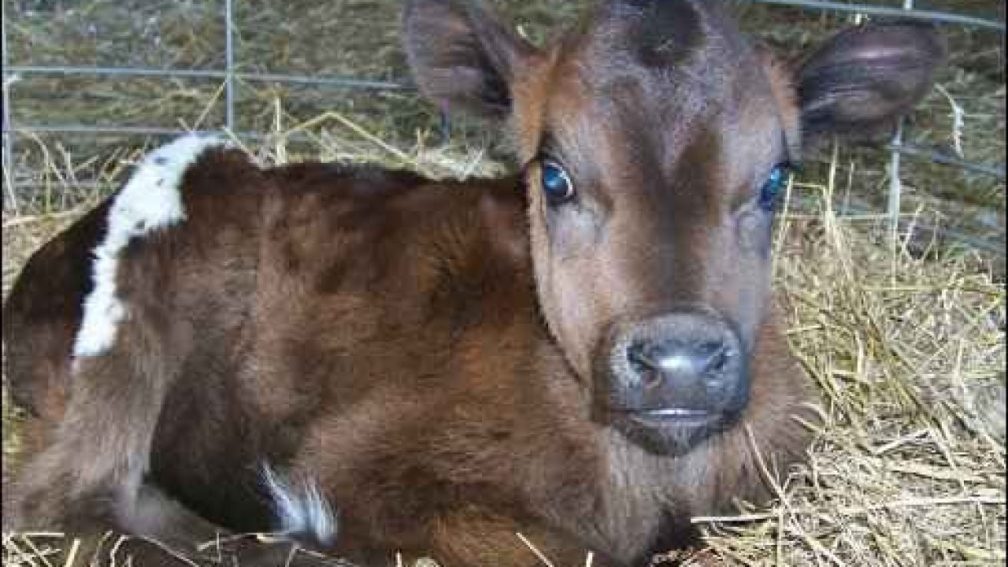
16 calf

Today (yesterday as I type/upload this) was a tough day. Hump day I suppose. I worked on a few poems, some in the researching, some in the drafting, none really caught me or took off. I felt feverish & dizzy & headachy for long parts of the day, so in a way it makes sense that the pome I’m choosing to upload is about a medical condition relevant to cattle; & a lesser extent humans; though thankfully the number of cases for both have declined dramatically. 

It’s basically the draft I had at 11pm yesterday when I gave up for the day & went to bed. It has been tidied & tweaked a bit, though I think it still needs work.

*****

mad cows

who would have suspected
when non-cannibal cows
eat ground up blood — or bones — or brains
of other cows — or sheep — or pigs
bad things might occur

i. Bovine Spongiform Encephalopathy (BSE)
physical transformations — abnormal gait : poor balance : loss of muscle control :  coordination : tremors & hyper-responsive to stimuli : ataxia 

changes in temperament & behaviour — becoming : aggressive : nervous : frenzied : anxious in certain conditions

as well as — weight loss, decreased milk production, lameness, ear infections : & teeth grinding caused by pain : persistent pacing : rubbing : licking

over : weeks & months : eventually recumbency : coma : death

ii. variant Creutzfeldt–Jakob disease (vCJD)
one man who caught the disease
from eating contaminated beef

— had trouble sleeping — his handwriting deteriorated — lost interest in trains, his lifelong passion — regularly fell down stairs — slurred his speech — forgot things, PIN cards — hallucinated — defecated in his clothes — died

all so that baby calves
could grow up quicker
be sent to market faster
be eaten sooner

Day 15 — how a virus changed a continent

519788730-watussi-cattle-zebu-british-east-africa-british-crown-colony

It’s been disturbing to discover during the course of my research, that pandemics have been going on throughout human history far more frequently than I’d imagined — more than just the bubonic plague & smallpox in the Americas ones that are probably reasonably well known. How easy many of them are to transmit & how aggressive they are.

Today’s poem is about an old virus which caused devastation when unwittingly introduced into a new environment in the late 19th century; & where unfortunately, the consequences of that action continue to present major health & economic hardship to millions. And all this, despite it being only the second disease ever to be completely eradicated (outside lab stocks).

An apology: sorry for the long poem, I didn’t have time to write a short one. This one will definitely need softening & massaging & trimming, once April ends. The title is aspirational if not actually accurate.

*****

rinderpest: a quick poetic history

i.
cattle-carried cousin of measles
& canine distemper
a central Asian steppes native
but possibly a greater killer
than fellow conqueror Genghis Khan
repeated invasions came & went
over centuries as armies swept
through westwards into Europe
causing carnage beyond that
normally brought by war

ii.
an Italian army later carted cattle plague south
in a periodic invasion of Eritrea
where it quickly kontiki-toured its way
west across the continent then south
in around a decade killing 90 or more
per cent of cattle it encountered
along with buffalo, wildebeest, even giraffe
causing Africa’s greatest natural calamity
so many corpses so close together
vultures forgot how to fly

iii.
although the virus targets
cloven-hoofed animals only
it none-the-less devastated human populations
herders had no livestock, farmers no oxen
to pull ploughs or drive waterwheels
gaunt, half-starved, covered with skin diseases
weakened populations fell prey to diseases
such as smallpox, cholera and typhoid
as well as Europeans ring ins
having lost all, or nearly all
some became demented
some roamed the bush calling imaginary cattle
many are said to have taken their own lives
many societies never recovered their numbers
let alone their wealth, power, culture

iv.
with indigenous populations decimated
Europe’s African scramble was made even easier
taking over vast tracts of land with barely a fight

v.
but the ramifications were still
not complete — before rinderpest
the cattle kept tsetse at bay
by grazing the plains grass sward hard
preventing tree seedlings & shrub growth
with cattle gone, the landscape transforms
pasture becomes woody grassland
& shady thornbush thickets
prime real estate for tsetse to deposit larvae
sleeping sickness spreads to areas
where it was previously unknown
carrying millions off to permanent sleep
the land they once farmed, abandoned
to wild animals & killer flies

vi.
to rub salt into any of the many wounds
European colonisers seeing the tsetse-infested bush
teeming with wildlife assumed it as the erroneous
but enduring archetype of primeval nature
& created Africa’s great national parks
the Serengeti, Masai Mara, Kruger et al
from which humans & their cattle were
persona & bovina non grata both
the irony that less than half a century
earlier they’d been open grassland
conveniently overlooked by everyone

vii.
& so it is that ecological, economic
cultural & geopolitical threads all rise
or fall on the existential caprice of a microbe


STAT
By the end of the century, most of the cattle in southern Africa had died, a toll estimated at 5.5 million.

STAT
local cattle population dropped from about 400 000 in 1891 to just 20000 the following year. The result was famine among the Hima in Karagwe and Ankole, the Tutsi in Rwanda and Burundi, and the Soga of Uganda, who all lived almost entirely on a diet of milk and blood. In south-west Africa, the Nama and Herero pastoralists were also starving.

STAT
In southern Africa, the tsetse, which largely disappeared from the Zambezi and Limpopo valleys in the mid-1890s as rinderpest swept through, revived from about 1904 and took over its former domain and more, says Ford. From virtually nil it had grown to cover 5600 square kilometres of the two valleys by 1913 and 47 000 square kilometres by 1930.

Day 14 — love in a time of corona

14 EKG-Heart

Reading An Anthology of Imagist Poetry today & Richard Adlington has several poems which are entitled “Images” … & are little snippets of love poems. So, trying to flip the idea of a love poem on its head I’ve written one to Coronavirus using Adlington’s layout & structure.

*****

a series of small love songs to Coronavirus

I

you repeatedly overheat
me — a wheat bag
left too long in an oven

II

so nervous near you
can only cough words
— instead of speak bona fides

III

my throat throbs
— gulps wonder as i
gaze on your venom

IV

utter exhaustion
— fatigue that turns itself
on & off in every cell

V

my chest tightens
doing the simplest tasks
— smiling, whispering your name 

VI

every thought of you
makes my head ache
— conduit of weird electronic surges

VII

now all smell & taste
are gone — i gobble raw
ginger like candy

Day 12 – the hell of easter sundays

12 ole-magnus-schei-sunnevag-untitled-76

30 years ago today, Easter Sunday 1990 (April 15 of that year), my fiancé/soulmate & I experienced the first of three miscarriages of our three and half year relationship. We were kids, both 19. 

Back then there was no internet, we didn’t know where to go get support, no easy way of knowing that we were not unique in this. But it happened twice more during the next two & half years. Each time got harder, harder to come back from. Eventually our relationship ended, in no small part due to the stresses & sadnesses of those three losses; although there were other circumstances complicating things too. 

I have never fully recovered from the loss; almost daily wonder what different paths my life would have taken had I become a father way back then. It damaged me in ways I didn’t understand for decades. It took almost 25 years to “process” the grief (even though I still feel it) but eventually my alter-ego wrote & staged a 1-woman play which got much of the pain out of me … & enabled me to find a fragile kind of peace. Naturally, I’ve written countless poems about it. & every Na/GloWriPoMo the poem on April 15 or Easter Sunday is bound to explore it in some way. That’s another little gift: the fact that it has two “anniversaries” which have only aligned once in the last 30 years.

Also helping is the fact that a once young person I taught drama to writes about her miscarriages so honestly, lovingly, & beautifully on facebook (that often trite medium). I believe her words are profoundly positive & healing for me, herself, her partner, friends & family, & no doubt many others. I also love how someone I once taught is now teaching me. Thanks, Alice, for giving me the courage to write this post so openly & reinforcing the serenity to know it’s okay on those days when coping doesn’t seem possible. 

*****

pandemic for one

this disease : infects & reinfects my mind : repeatedly : over decades : every easter : of course : but christmases too : birthdays : facebook posts : of friends celebrating : first days of school : & 21sts : & weddings : & births of grandkids : & just about anything fucking else : can set it off : a time bomb explosion : of regret : anger : what ifs : why mes : & i wonders :

there is no herd immunity : i am the herd : reinfection is frequent : sometimes more virulent : than ever before : the curve has not flattened : the only cure : a wormhole

Day 11 – haiku day

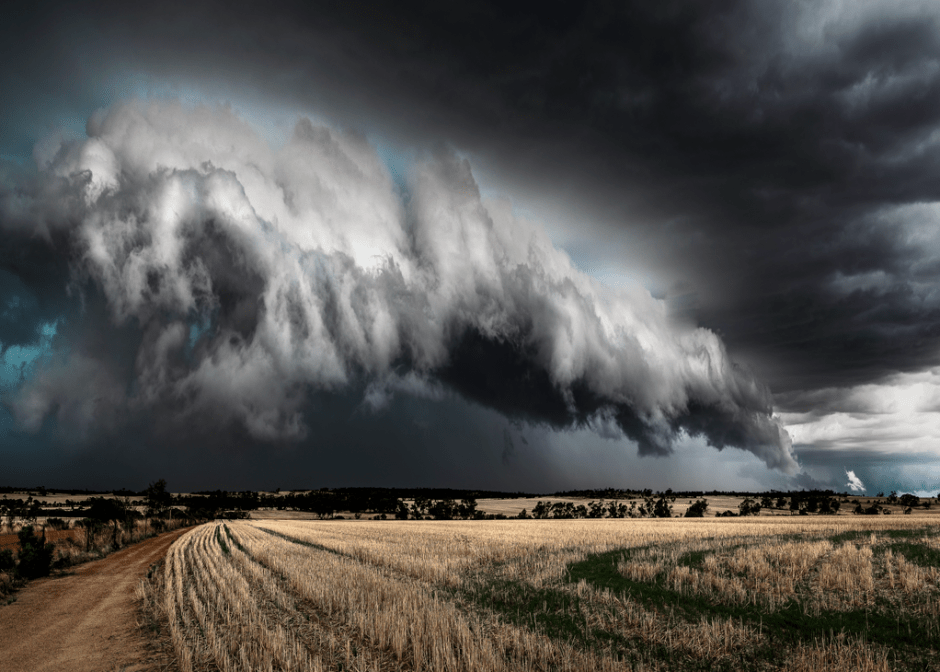
11 storm

To make my life more complicated, as well as doing GloPoWriMo I’m also participating in #TheDirtyThirty2020 (hey it’s not like there’s anything else going on ATM right). Every day they offer specific prompts. Today, Day 11 is #haikuday. & so, in the interests of my mental health I’m doubling up today’s poems. The haiku I wrote for Dirty Thirty I’m also using for today’s pandemic poem.

*****

storm

garden sunshine spreads : grey cloud curves overhead — the world changes in an afternoon