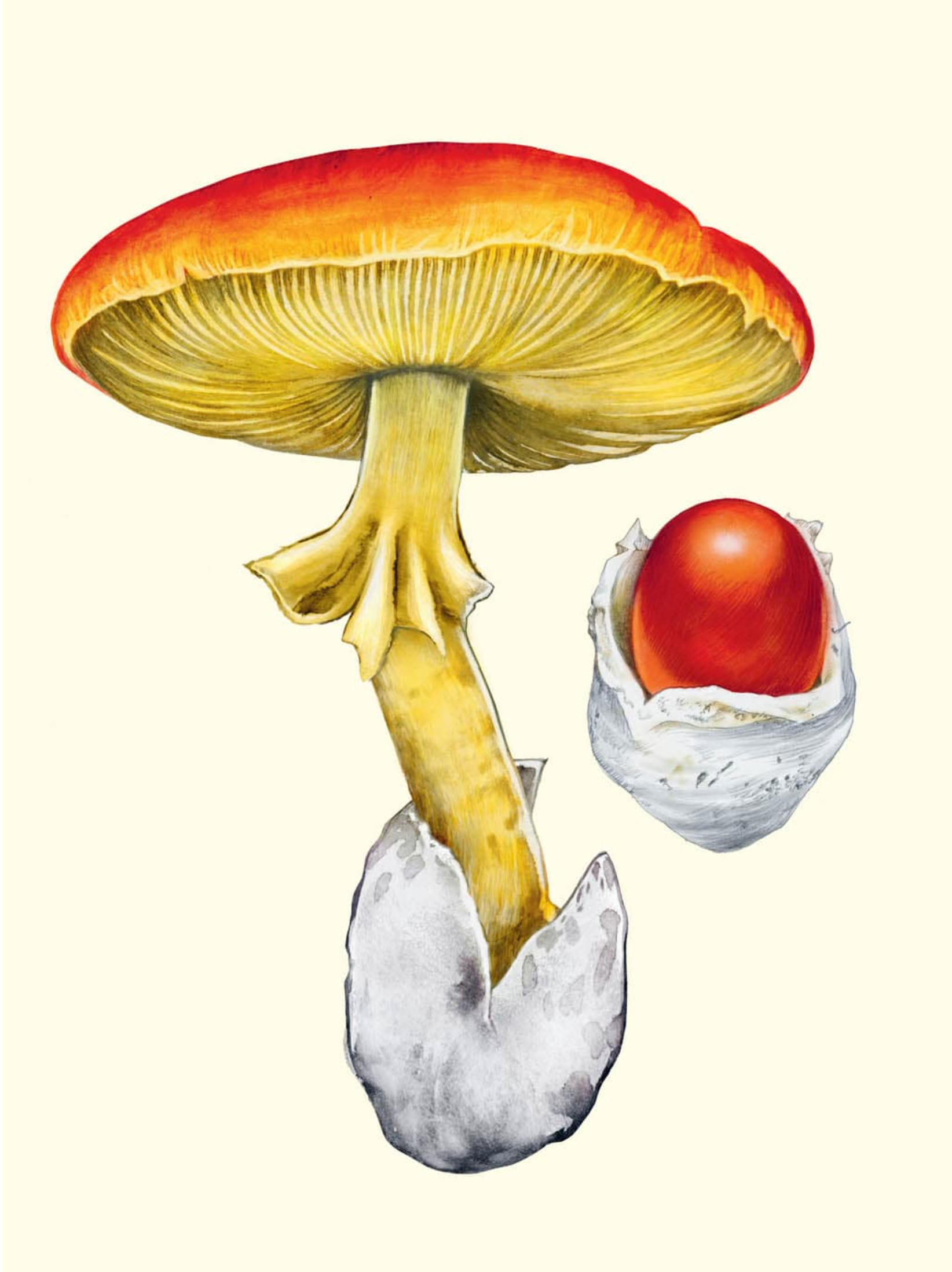
Day 28 — Fox + Fire

Starting to feel like I’m running out of time & there’s still so many fun fungi ideas I wish to explore. But I have to get this one down. So it’s back to the fabulous fungilegium form to capture another extraordinary genus of mushroom.

Today’s Factoid is perhaps the silliest of the month — & as such, quite possibly my favourite.

[Disclaimer: Another block of catch up poems, all written on the correct day (Tuesday) but unable to get online in time.]

*****

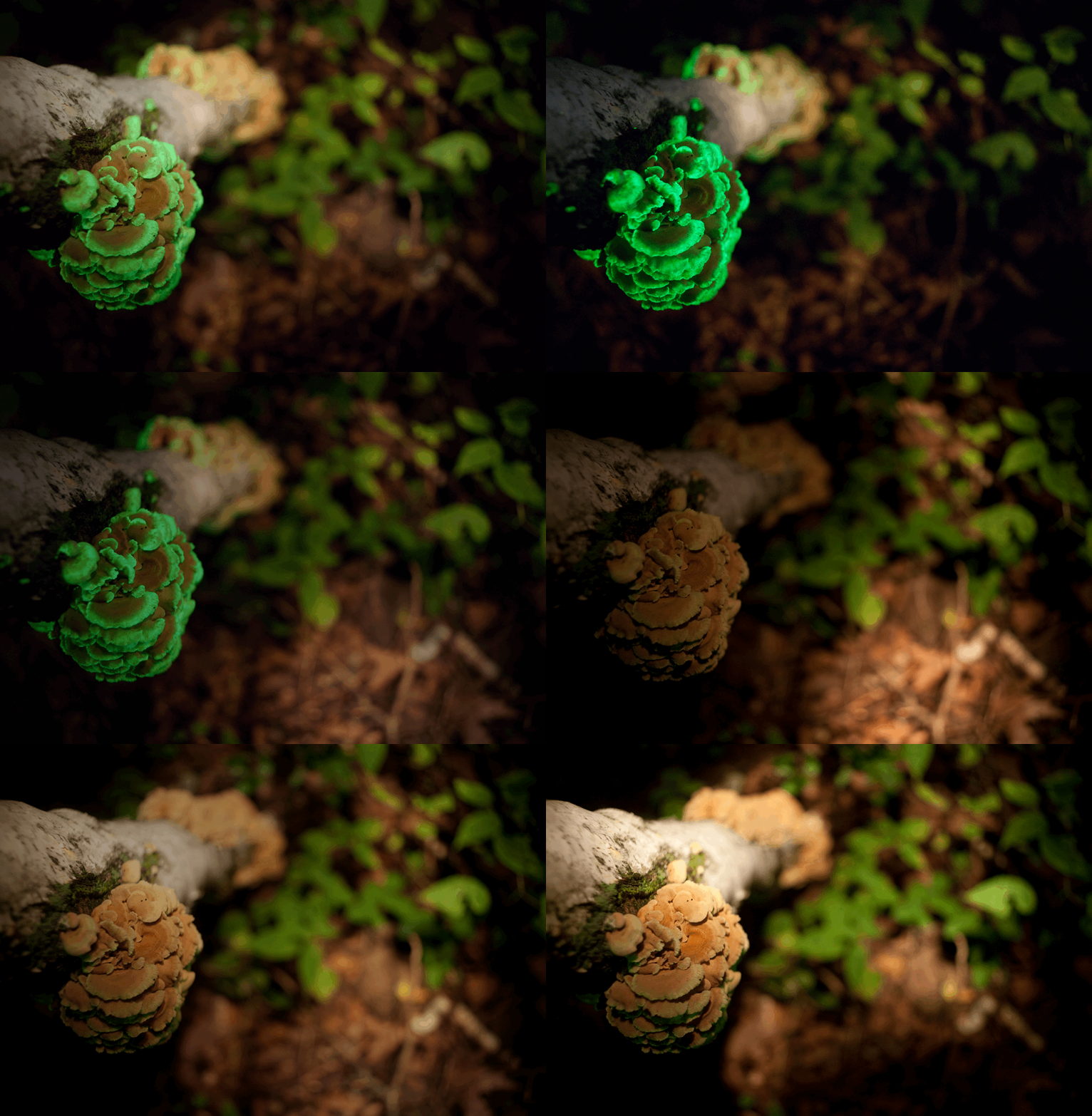
fungilegium: Night-light Mushroom
Mycena chlorophos

Emits mysterious green glow in the dark.
Beautiful word. Bioluminescence. Say it. Ahhh!
Concentrated colour in the cap & blades.
(chloros = green, phos = light). Bright light in night.
Attracts insects which disperse spores.

Technical. Luciferin molecules oxidise/catalyse 
luciferase enzymes. I don’t really know. But energy 
ie photons released. Thus. The neon green scene. 
Naturally this magic light : creates local legends,
supernatural phenomena, magic, & omens.

Like JayC in the tomb : only lasts three days 

*****

Day 28 Factoid — Two Wise Old Men Ponder How Word Order Matters

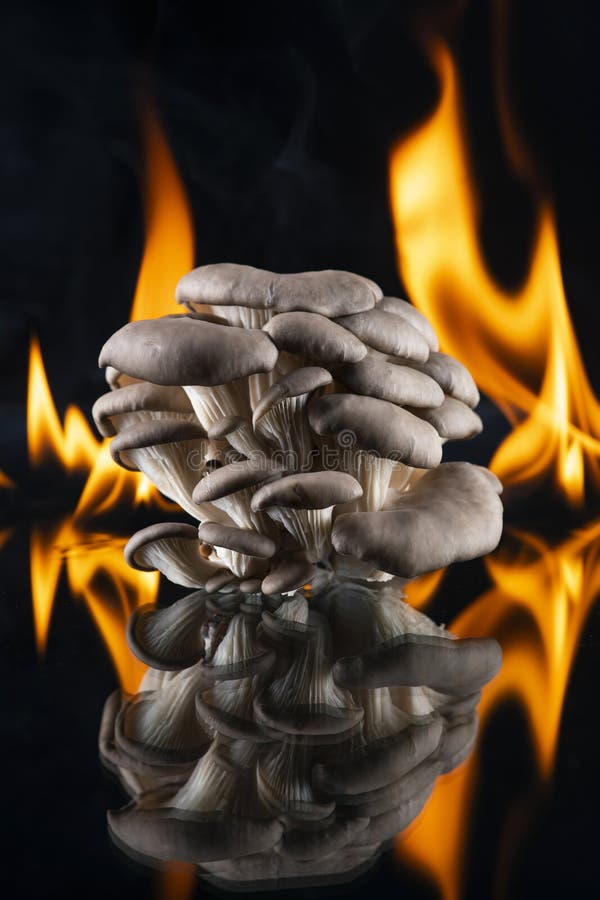
Foxes on Fire

Aristotle observed bioluminescent fungi
382 years before the birth of the big guy
called it “Foxfire” & said was cold to touch

All month I’ve been thinking of a spy novel
read in high school wondering if I can use it
in a poem — to discover just then it was called

“Firefox” — so not even the most tenuous fungal link

Day 27 — lichen + minerals

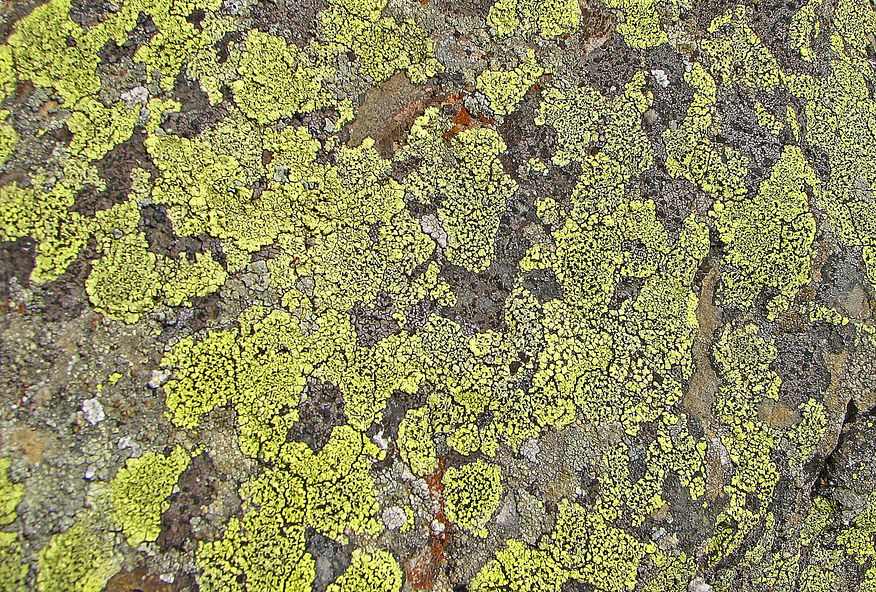
Some poems come quickly & unexpected. Almost effortlessly. This one came about because I saw a photo of a lichen called Rhizocarpon geographicum (map lichen) in one of my reference books. And within 15 minutes, this poem had escaped.

The Factoid is a reworking/amplification of a line I remember reading that still blows my mind.

[Disclaimer: Another block of catch up poems, all written on the correct day (Monday) but unable to get online in time.]

*****

fungi-algae-fusion-ophile 

we called them then : & still do now : moss rocks : a wiser me : probably never can again : as i know them to be : lichen rocks : but c’est la vie : i used to love : staring at them as a kid : up the back of our small farm : on the stone wall fence : or the big lumps of granite : iceberg-like : buried 4/5ths underground : just a crest : poking out : like a dolphin’s dorsal : anywhere really : time had a chance to slow down : settle : to my eye : they looked like : crazy continents : maps of far-off fantasy worlds : yes i am one of those : card-carrying cartophiles : one of those mad map enthusiasts : always referring back to the maps : of made up worlds : in the beginning of big epic fantasy wonderlands : wondering which exotically named place : the protagonists would be heading : next : & the same with these glorious : lichen-covered : living maps : allowing me to be : in multiple universes : at once 

*****

Day 27 Factoids — The Boundary Riders

the go-betweens

it is likely that
some portion 
of the minerals 
in your body 

has passed 

through lichen 
at some point
in the history
of the world

Day 26 — Stinkhorns: in Woodlands & in Rock

Sometimes I’m just a silly little adolescent boy. The Factoid likewise.

[Disclaimer: Another block of catch up poems, all written on the correct day (Sunday) but unable to get online in time.]

*Snigger*

*****

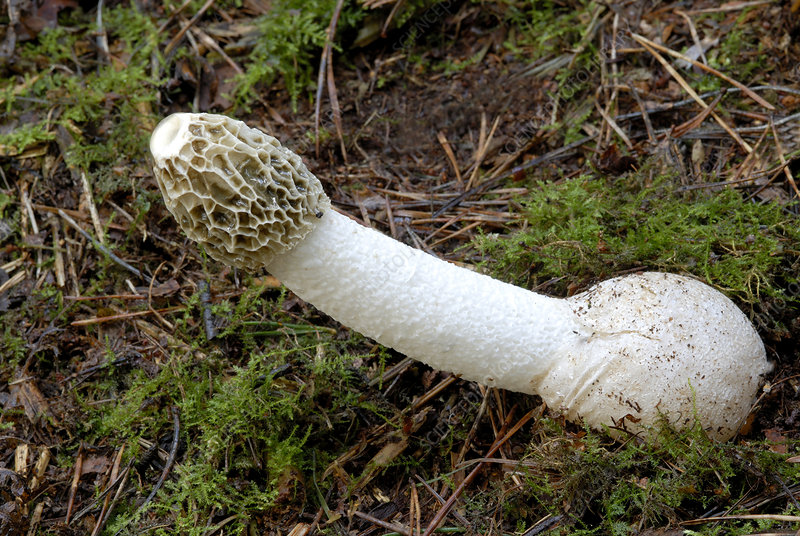
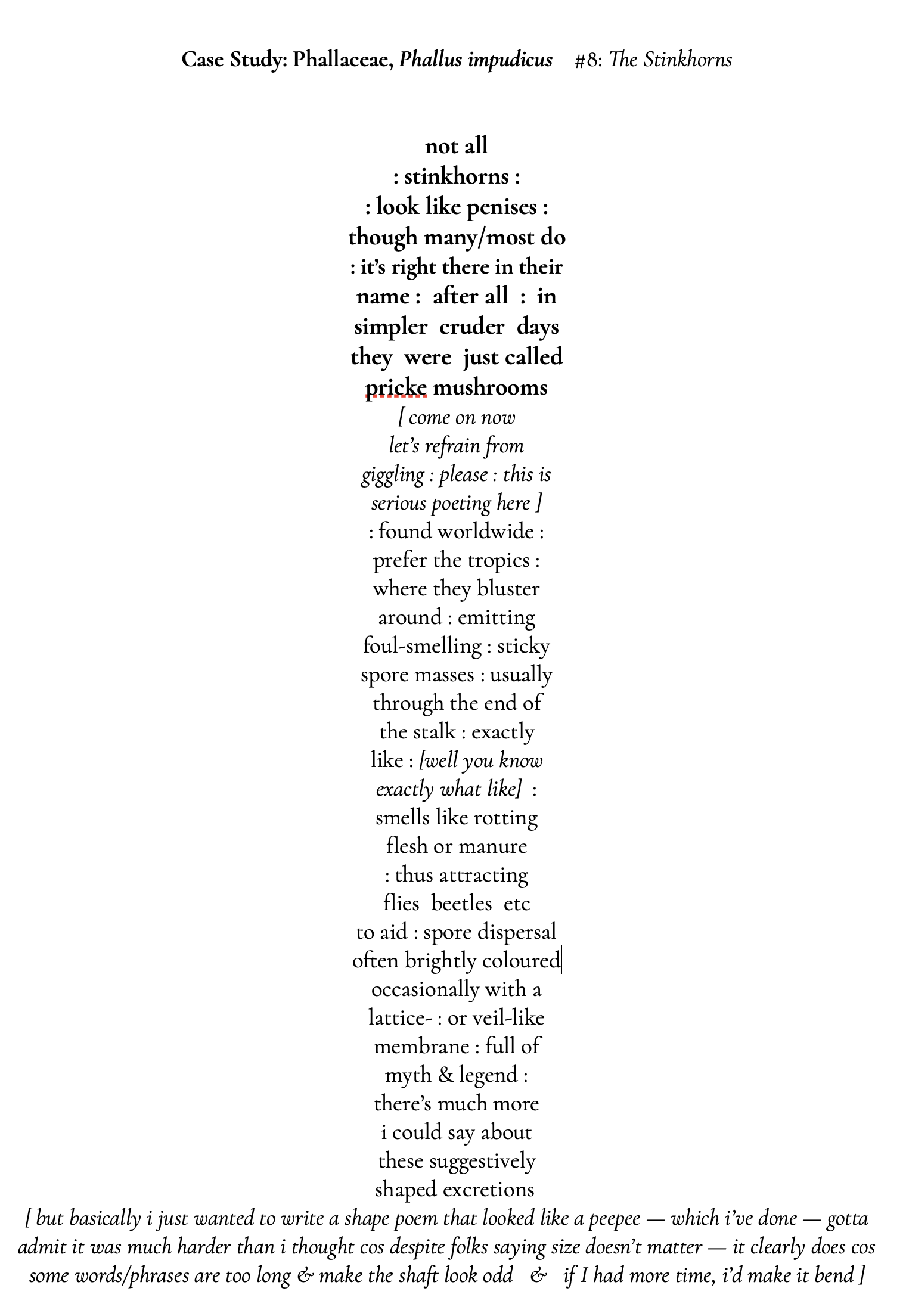
Case Study: Phallaceae, Phallus impudicus    #8: The Stinkhorns

[ Click to enlarge image ]

*****

Day 26 Factoid — (more) Some People Can be Inspired By Anything  

Flood (1994), Epic Records

English alt rock/grunge 
band Headswim released 
a song called “Stinkhorn”

i’ve listened to it exactly once
it sounds much as i imagine
the fungal iteration smells

Day 25 — lethal + prejudice

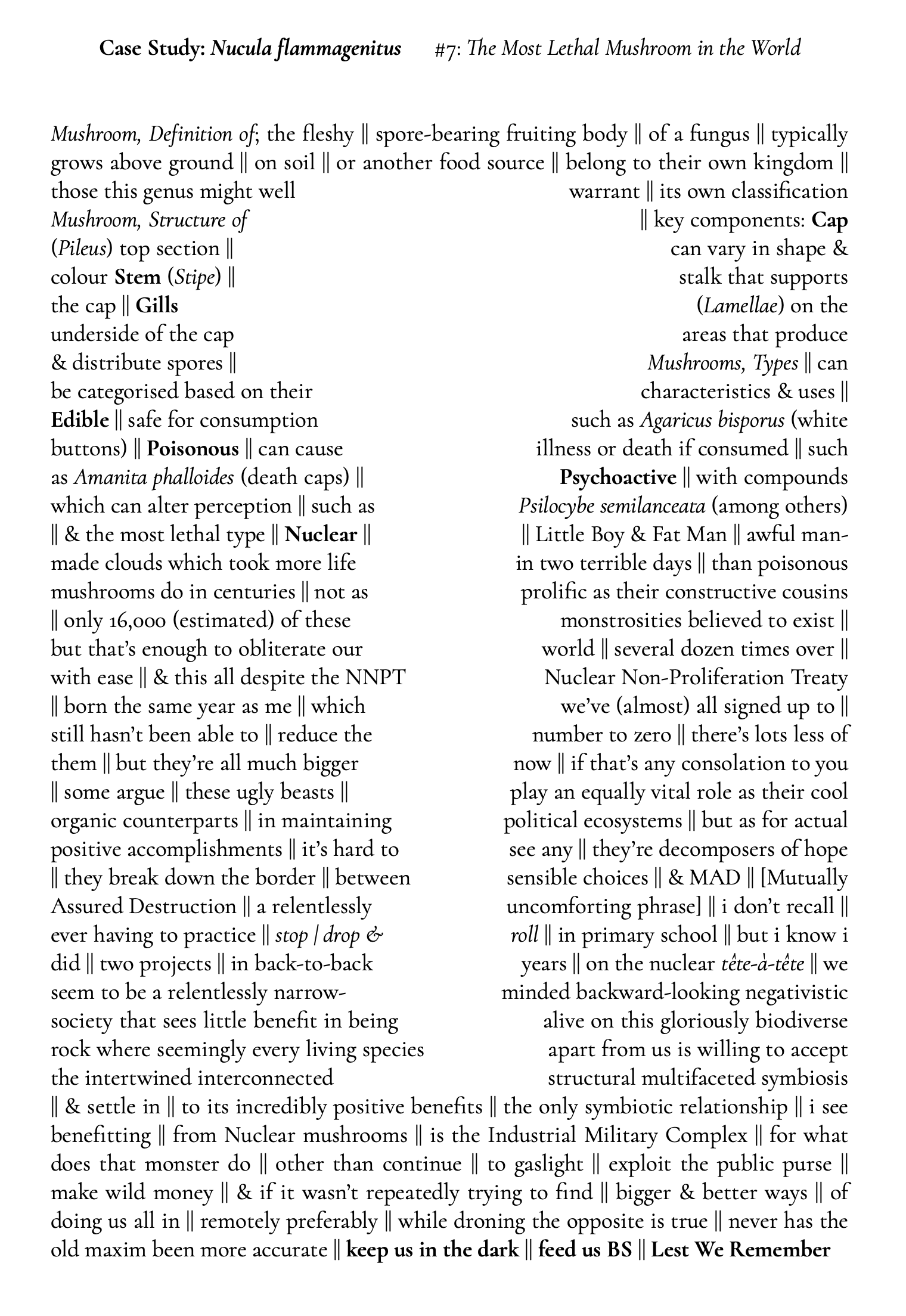
Lethal Prejudice (today’s two-worder grab) sounds like the title of a terrible Jean Claude van Damme action movie. It’s not. But it is a shape poem (or indeed, an anti-shape poem) about the world’s most lethal mushroom. A relatively easy choice when Anzac/war etc + mushrooms turned up very few hits.

The Poetic Factoid poem was one of the very few minor fun facts I discovered & even so, is barely more than prose broken into couplets (not my finest work) but I spent waaaaay too long on the proper poem.

[Disclaimer: Another block of catch up poems, all written on the correct day (Saturday) but unable to get online in time.]

*****

Case Study: Nucula flammagenitus      #7: The Most Lethal Mushroom in the World

[ Click to enlarge image ]

*****

Day 25 Factoid — WWII Was A Key Factor in Making this Mushroom Popular 

Pleurotus Prejudice 

i.
put-upon, food-scarce, & desperate — the failing third reich was forced
to cultivate what was previously considered a mediocre second choice crop

ii.
the easy ability of oyster mushrooms to thrive on diverse substrates 
(wood & agricultural waste) made them a vital sustainable food source

iii.
following the war they were recognised for their subtle, savoury flavour 
became high culinary artefacts & started sprouting in posh shops everywhere 

Day 24 — homage + origins

Yesterday I read the whacky American children’s poet, Shel Silverstein; today English playful prince poet [shouldbe] laureate, Brian Bilston. So I was tempted to try a silly poem that played with language the way both of those extraordinarily witty gentleman do. It’s not as good as either of theirs, but I had fun with it. And perhaps with tweaking & more time I could tighten it up a bit.

The Factoid is a simple one as I’m proper tired & it’s almost midnight.

*****

homage (to the room of mush)

grow in spaces where there’s no         mushrooms

burst out of the earth with lotsa          rushzooms
last night nothing suddenly the           brushbooms

whole forest floor covered in              plushplumes
a multitude of life bursts from            gushwombs

delicate apparatus make you            blushblooms
admiring the mad variety of            slushspumes

weaving life from decay on                lushlooms
recycling matter via their               flushfumes

then nothing almost as suddenly        crushdooms
seemingly returning to their              gloomtombs

truly wonderful things are these        mushrooms

*****

Day 24 Factoid — The Origin of the Word Mushroom is as Mysterious as they themselves are

Etymology

there is no clear consensus 
on what mushroom might mean
perhaps comes from the Old French
for moss but it hardly seems
definitive 
                  but feels appropriate
the origin of the word
is as mysterious
as they themselves

Day 23 — not Shakespeare + critiquing society

Normally today would be a Shakespeare-themed poem — but given the only line in all of his works referring to mushrooms is when Prospero says to his elves: “whose pastime/Is to make midnight mushrumps, that rejoice/To hear the solemn curfew” in the famous drown my book monologue which ends The Tempest, I thought I’d try something different this year & write about another British writer.

Today’s Factoid is one which logically follows on from the main poem. 

*****

The Swift Rise & Glorious Achievements of H. B. Heelis, Mycologist 
Scientific illustrations and work in mycology

upper middle class : privately educated at home : Victorian : by all accounts very bright : natural science : her delight : bewitched by botany : interested in most things a la nature : fossil-collector : archaeological artefact inspector : entomology expert 

drew & painted across every interest area : with swiftly increasing skill : peppered letters to friends : or handmade christmas cards : with whimsical illustrations of : anthropomorphic mice, rascally rabbits, cute kittens : & so on : soon honed in on : the fantastic field of fungi

perfected microscopic sketches : of fungus spores : theorised as to their germination : reproduction : dismissed symbiosis : two men supported her interests : others mocked her : saying she was : only an amateur : (not a barrier if a man) : but worse — a woman — which of course : at the time : was the biggest crime of all : in the world of academia

despite this : she wrote up her research : submitted a paper : to the Linnean Society : read by a male supporter : because naturally : she could neither read it herself : nor even attend : eventually discouraged : from the field altogether : by the blockhead male gatekeepers

in need of money : transformed a cute tale she’d written : to amuse a friend’s child : about “four little rabbits named Flopsy, Mopsy, Cottontail, and Peter” : & so Beatrix Potter’s illustrious career was born : establishing her renown worldwide as : writer-artist-storyteller

so mycology’s loss : was literature’s gain — but wouldn’t it be nice : if she’d lived in a world : that didn’t turn her away : from her first love : perhaps even could’ve done both : or is that too much of a fantasy : to be believed

footnote
a century passes : since the tabling of her paper : at the stuffy old Linnean Society : when they issue : a posthumous apology : for the sexist way they handled her research : ahhh lovely : she’d only been dead 54 years

*****

Day 23 Factoid – A Scathing Critique about Civilisation as it Stands To Date

Myc(elium) Drop

Beatrix Potter
is the neither the first
nor the last woman
this kind of shit
has happened to

Day 22 — ancient form + modern facts

The book of poetry I’m reading today is The Wild Old Man by Chinese Poet Lu Yu (or You) who lived from 1125-1210 which was a part of the Southern Song Dynasty. His style is clean, elegant. Parsed back to barest essentials.

All his poems are in the form I’ve attempted today. 8 couplets. Short phrases (almost Old Man Hemingwayesque, without being quite as blokey brutish & brusque. Blend of nature based & political themes. No doubt I’m missing/not picking up on many subtleties but I like trying new things & that’s what NaPoWriMo is good for. [Though I do still really love florilegiums. Will definitely be revisiting them to explore other fungi, if not in the next week, once April is over.]

Note: even the title is in the style of Lu Yu (it’s actually based on the title of one of his poems with relevant details altered to accomodate my appropriation).

The Poetic Factoid today is three Factoids in one — you think you know where it’s going, but rugs are pulled.

*****

After the First Rainstorm of the Season, Deep in the Warm Earth of Mount Crawford Forest, Some Thoughts

Deep within earth. I begin.
Reaching outward. Every direction.

Already connected. To every tree.
In my forest. Networked to

A life force ancient 
And unstoppable. Have waited.

For the rains to come again.
They are later. This year.

Even later than last year. It is
Alarming. How quickly the air

Seeks to change us. Change our ways.
I have moisture in my makeup.

It is part of who I am. I need it
To do every wondrous thing I must.

But if I go too early. And more does not.
Fall. I will fail. Spore. Less. 

*****

Day 22 Factoid — Production, Consumption, & Oh-My-God-Son!!

Quick 1-2-3 Data Poem

the largest producer 
of mushrooms in the world
is China 

the largest consumer 
of mushrooms in the world
is China 

the country with the highest number 
of mushroom-related poisonings in the world
is the United States 

Chinese recognise toxic fungi
better than Americans can

Day 21 — Caesars: generic + specific

I really enjoyed writing yesterday’s poem based on Sunday’s NaPoWriMo prompt so have decided to try another florilegium. It’s helpful because there are lots of extraordinary mushrooms I’d like to write about but I don’t have the energy to do proper Case Studies on them all (& there’s probably not enough meat, in all their stories as well). Whereas a florilegium has the bonus of being concise — keeping me on task, cos I am something of an initial overwriter.

Plus a couple of the books I’m researching from have beautiful hand drawn illustrations of exactly the type that Sylvia Legris used for her original poems of this type.

The Factoid touches on a popular legend in Roman history — although how accurate it is, historians cannot agree as the sources are scant & somewhat contradictory.

[Disclaimer: Unlike yesterday there is no disclaimer because I have finally caught up. Yay!!!]

*****

fungilegium: Caesar’s Mushroom
Amanita caesarea

Red. Golden. Orange. Like sunsets. Tasty.
Supposedly reserved for Caesar’s table 
& breadbasket only. Yet the literature immediately
contradicts itself. As it’s found alongside 
old Roman roads. Courtesy the legions. Ave!

Most of its siblings. Look similar but
have poisoned hearts. So take care. 
Eat it. If you dare. But be aware.
It truly is a King’s Egg. Not a Death Cap
or Fly Agaric. Which could kill you quick.

We who are about to die et cetera & so on …

*****

Day 21 Factoid — Even Roman Emperors Make Bad Decisions

fungi, Claudius

i. While Alive
marry badly/unwisely : four times : the last to a highly ambitious woman : argue lots with her : just so she’s got adequate motivation : (as if making her son Emperor isn’t enough) : to do you in : banquet heartily : including mushrooms : (among your favourites) : watch a theatrical performance : consume whole bowl : of poisoned mushrooms : (possibly Amanita muscaria) : & when that doesn’t completely succeed : perhaps swallow : some poisoned gruel too : linger : a long time : painfully : before dying 

ii. After Death
senators snigger : as your stepson Nero : delivers the expected eulogy : perhaps not quite receiving the respect required : despite this : still achieve deification : although Seneca : somewhat mocked your passage to eternity : in a treatise loosely translated as : ‘The Pumpkinification of the Divine Claudius’ : in it you are depicted as : a bumbling fool : rejected by the gods : your literary counterpart : thinks himself worthy of Olympus : but the gods ridicule him : & he is unceremoniously : packed off to Hades — if only you’d : preferred figs instead

Day 20 — bird’s nests + more dad jokes

Yesterday’s NaPoWriMo optional prompt was:

The word florilegium refers to a book of botanical illustrations of decorative plants and also a collection of excerpts from other writings.  In her poem, “Florilegium,” Canadian poet Sylvia Legris gathers together many five-lined stanzas that describe flowers but also play with the sounds of their names, their medical (or poisonous) qualities, and historical aspects of herbalism. Today, pick a flower [I’ve changed it to fungi]. Now, write your own poem in which you muse on your selections’ names and meanings. 

I’ve chosen this because after the massiveness of the two weekend poems I would like something simple & defined. A five line poem sounds ideal. (I might do a couple, depends how it goes.)

The Factoid revisits a very popular topic from Sunday.

[Disclaimer: As with yesterday’s entry, this poem was written on the correct day (Monday) but was unable to get it online owing to painting again, repercussions of meetings still, & the arduousness of queuing up a near infinite amount of blogs.]

*****

fungilegium: Bird’s Nest
Cyathus

Whimsy abounds as alternate names 
spore out of the text books
like fungi from the damp dirt.
Elfin Cups, Fairy Goblets, 
Pixie’s Purses, & Splash Cups.

Delicate. Trumpet-shaped nest.
Spores resembling eggs. Hard 
to spot. Allegedly. Make a wish. 
Fairies are nearby. Before the sun 
sprouts the birds away. To kill cancers.

*****

Day 20 Factoid – This Really Did Happen (Possibly)

A Joke Revisited

A Scot, an Aussie, an Englishman,
& a mushroom walk into a bar

The bartender says, “Sorry sir, you need 
to leave. We’re capacitively maximised.”

Mushroom: “What are you saying?”
Bartender: “There isn’t mushroom!”

[C’mon you’re loving the dad jokes, admit it.]

Day 19 — Menu + Millions

Another teamwork poem today, as a collective of great fungi come together to form a complete poem around a very tasty theme.

The Poetic Factoid is a quickie about the most expensive mushroom out there.

[Disclaimer: As with yesterday’s entry, this poem was written on the correct day (Sunday) but was unable to get it online owing to never-ending mudslides, back to meetings again (should we hold/what to do), & other exhaustions.]

*****

Case Study: Tastiest Fungi Feast #6: Menu Wish List

[please click to enlarge image]

*****

Day 19 Factoid – Most Expensive Mushroom

Who wants to be a millionaire mushroom?

Yartsa Gunbu
Ophiocordyceps sinensis
caterpillar fungus 

the fact that it can 
only be found at high altitudes 
on the Tibetan Plateau 
& in the Himalayas

hand-harvested halfway up 
those huge hills while
spring briefly makes
her annual appearance 

means it’s not quite more 
valuable by weight than gold*
going by today’s prices
but it’s pretty darn close

*highest recorded price $138,000 per kg; gold today was selling for $155, 265/kg US.