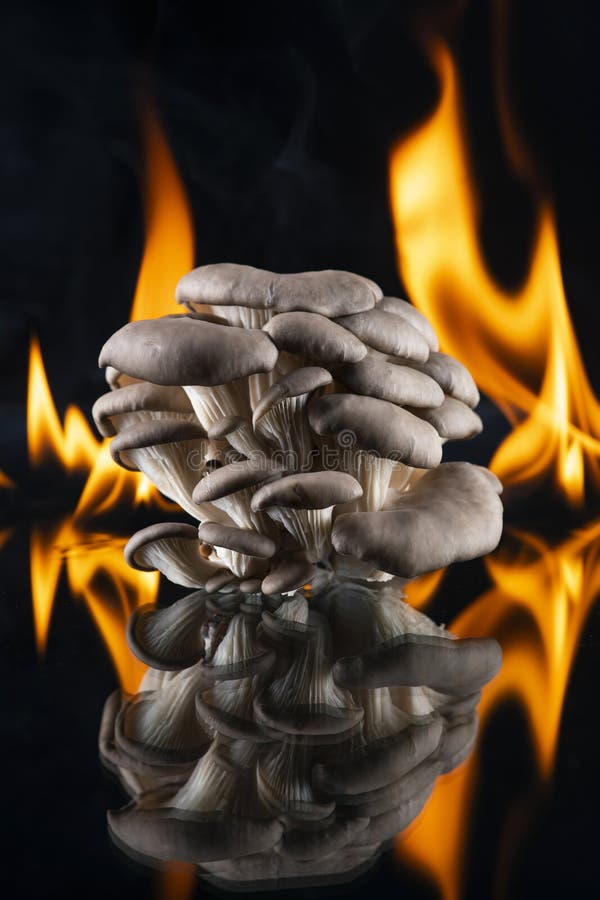
Day 28 — Fox + Fire

Starting to feel like I’m running out of time & there’s still so many fun fungi ideas I wish to explore. But I have to get this one down. So it’s back to the fabulous fungilegium form to capture another extraordinary genus of mushroom.

Today’s Factoid is perhaps the silliest of the month — & as such, quite possibly my favourite.

[Disclaimer: Another block of catch up poems, all written on the correct day (Tuesday) but unable to get online in time.]
*****

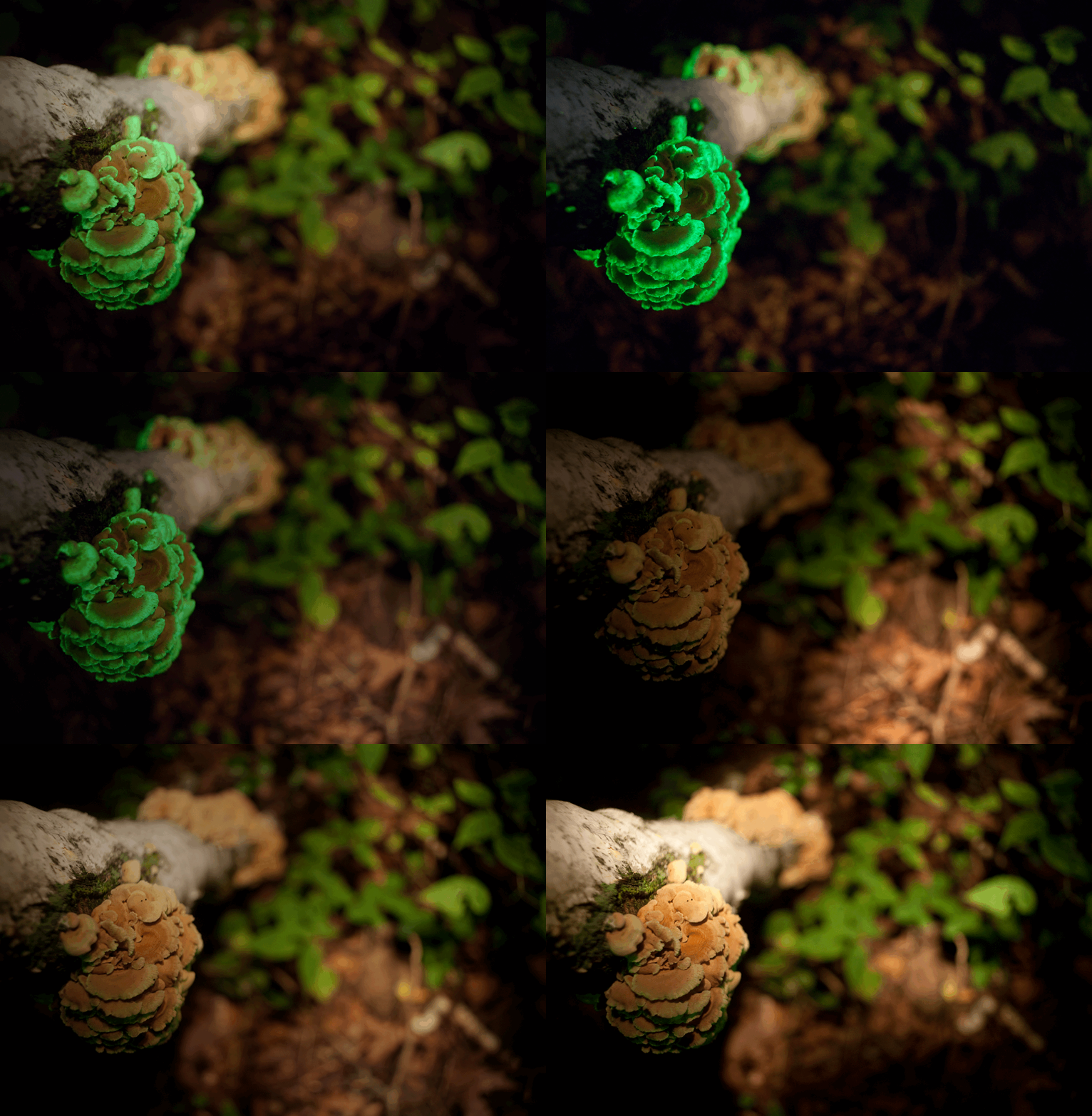
fungilegium: Night-light Mushroom
Mycena chlorophos

Emits mysterious green glow in the dark.
Beautiful word. Bioluminescence. Say it. Ahhh!
Concentrated colour in the cap & blades.
(chloros = green, phos = light). Bright light in night.
Attracts insects which disperse spores.

Technical. Luciferin molecules oxidise/catalyse 
luciferase enzymes. I don’t really know. But energy 
ie photons released. Thus. The neon green scene. 
Naturally this magic light : creates local legends,
supernatural phenomena, magic, & omens.

Like JayC in the tomb : only lasts three days 

*****

Day 28 Factoid — Two Wise Old Men Ponder How Word Order Matters

Foxes on Fire

Aristotle observed bioluminescent fungi
382 years before the birth of the big guy
called it “Foxfire” & said was cold to touch

All month I’ve been thinking of a spy novel
read in high school wondering if I can use it
in a poem — to discover just then it was called

“Firefox” — so not even the most tenuous fungal link
Day 27 — lichen + minerals

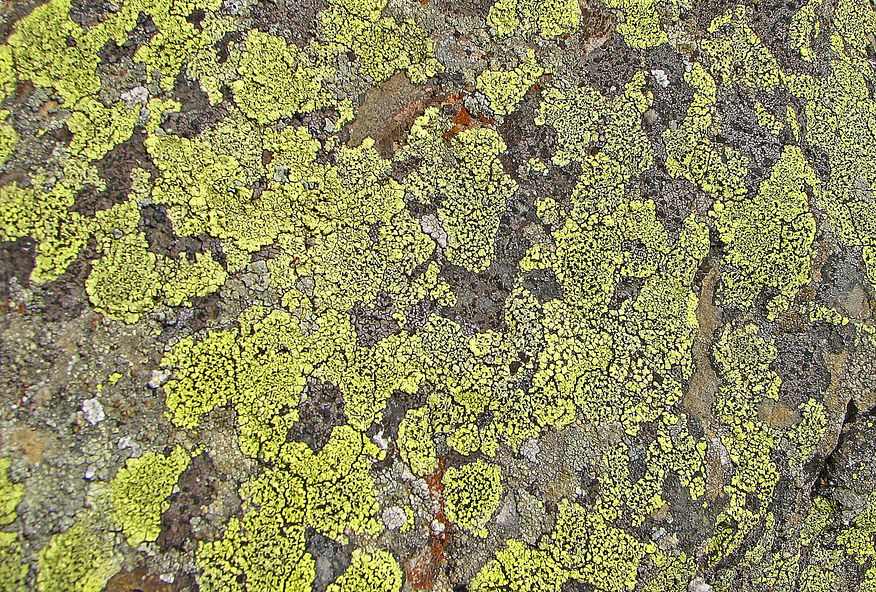
Some poems come quickly & unexpected. Almost effortlessly. This one came about because I saw a photo of a lichen called Rhizocarpon geographicum (map lichen) in one of my reference books. And within 15 minutes, this poem had escaped.

The Factoid is a reworking/amplification of a line I remember reading that still blows my mind.

[Disclaimer: Another block of catch up poems, all written on the correct day (Monday) but unable to get online in time.]

*****

fungi-algae-fusion-ophile 

we called them then : & still do now : moss rocks : a wiser me : probably never can again : as i know them to be : lichen rocks : but c’est la vie : i used to love : staring at them as a kid : up the back of our small farm : on the stone wall fence : or the big lumps of granite : iceberg-like : buried 4/5ths underground : just a crest : poking out : like a dolphin’s dorsal : anywhere really : time had a chance to slow down : settle : to my eye : they looked like : crazy continents : maps of far-off fantasy worlds : yes i am one of those : card-carrying cartophiles : one of those mad map enthusiasts : always referring back to the maps : of made up worlds : in the beginning of big epic fantasy wonderlands : wondering which exotically named place : the protagonists would be heading : next : & the same with these glorious : lichen-covered : living maps : allowing me to be : in multiple universes : at once 

*****

Day 27 Factoids — The Boundary Riders

the go-betweens

it is likely that
some portion 
of the minerals 
in your body 

has passed 

through lichen 
at some point
in the history
of the world

Day 25 — lethal + prejudice

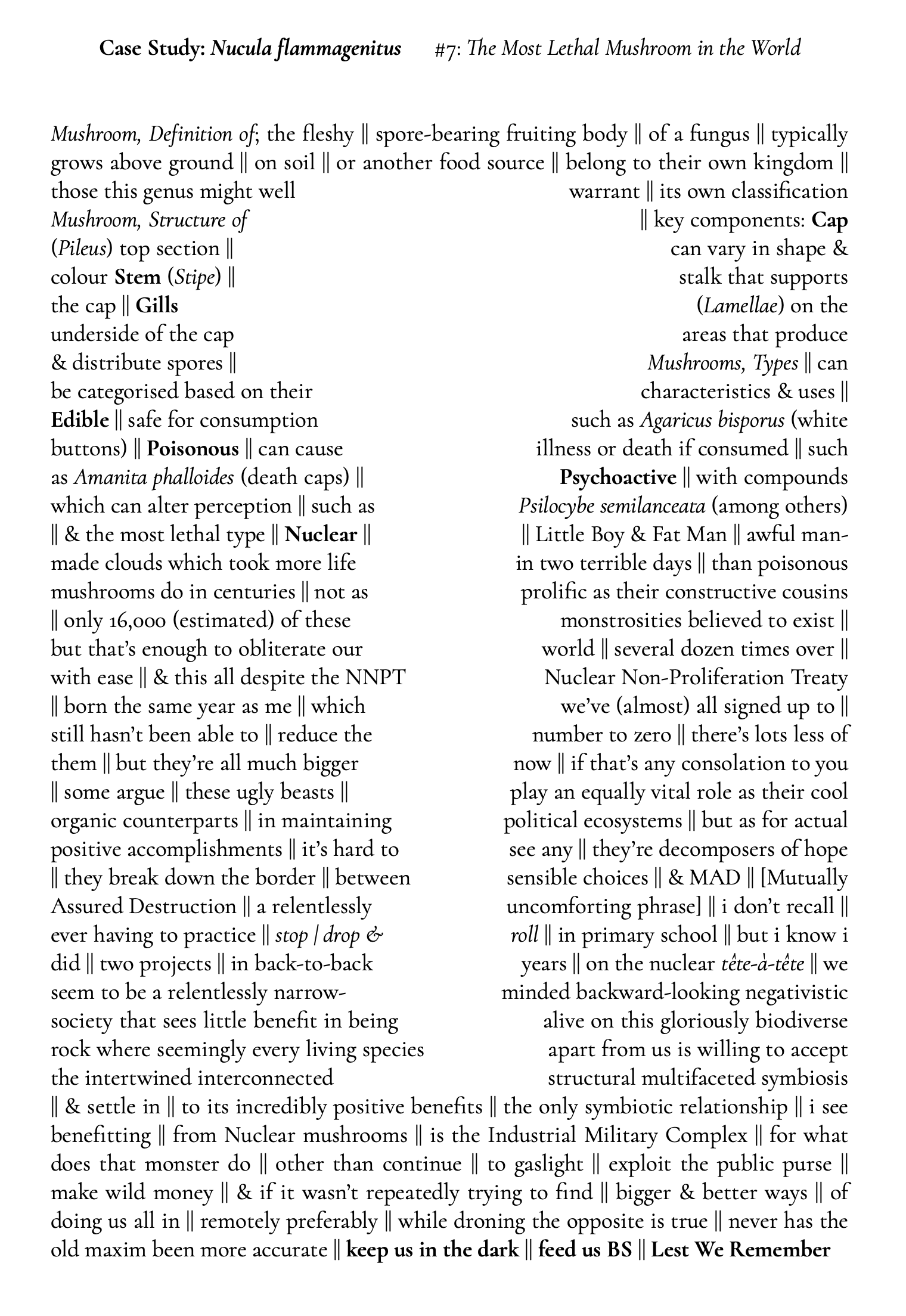
Lethal Prejudice (today’s two-worder grab) sounds like the title of a terrible Jean Claude van Damme action movie. It’s not. But it is a shape poem (or indeed, an anti-shape poem) about the world’s most lethal mushroom. A relatively easy choice when Anzac/war etc + mushrooms turned up very few hits.

The Poetic Factoid poem was one of the very few minor fun facts I discovered & even so, is barely more than prose broken into couplets (not my finest work) but I spent waaaaay too long on the proper poem.

[Disclaimer: Another block of catch up poems, all written on the correct day (Saturday) but unable to get online in time.]

*****

Case Study: Nucula flammagenitus      #7: The Most Lethal Mushroom in the World

[ Click to enlarge image ]

*****

Day 25 Factoid — WWII Was A Key Factor in Making this Mushroom Popular 

Pleurotus Prejudice 

i.
put-upon, food-scarce, & desperate — the failing third reich was forced
to cultivate what was previously considered a mediocre second choice crop

ii.
the easy ability of oyster mushrooms to thrive on diverse substrates 
(wood & agricultural waste) made them a vital sustainable food source

iii.
following the war they were recognised for their subtle, savoury flavour 
became high culinary artefacts & started sprouting in posh shops everywhere