Day 15 — how a virus changed a continent

519788730-watussi-cattle-zebu-british-east-africa-british-crown-colony

It’s been disturbing to discover during the course of my research, that pandemics have been going on throughout human history far more frequently than I’d imagined — more than just the bubonic plague & smallpox in the Americas ones that are probably reasonably well known. How easy many of them are to transmit & how aggressive they are.

Today’s poem is about an old virus which caused devastation when unwittingly introduced into a new environment in the late 19th century; & where unfortunately, the consequences of that action continue to present major health & economic hardship to millions. And all this, despite it being only the second disease ever to be completely eradicated (outside lab stocks).

An apology: sorry for the long poem, I didn’t have time to write a short one. This one will definitely need softening & massaging & trimming, once April ends. The title is aspirational if not actually accurate.

*****

rinderpest: a quick poetic history

i.
cattle-carried cousin of measles
& canine distemper
a central Asian steppes native
but possibly a greater killer
than fellow conqueror Genghis Khan
repeated invasions came & went
over centuries as armies swept
through westwards into Europe
causing carnage beyond that
normally brought by war

ii.
an Italian army later carted cattle plague south
in a periodic invasion of Eritrea
where it quickly kontiki-toured its way
west across the continent then south
in around a decade killing 90 or more
per cent of cattle it encountered
along with buffalo, wildebeest, even giraffe
causing Africa’s greatest natural calamity
so many corpses so close together
vultures forgot how to fly

iii.
although the virus targets
cloven-hoofed animals only
it none-the-less devastated human populations
herders had no livestock, farmers no oxen
to pull ploughs or drive waterwheels
gaunt, half-starved, covered with skin diseases
weakened populations fell prey to diseases
such as smallpox, cholera and typhoid
as well as Europeans ring ins
having lost all, or nearly all
some became demented
some roamed the bush calling imaginary cattle
many are said to have taken their own lives
many societies never recovered their numbers
let alone their wealth, power, culture

iv.
with indigenous populations decimated
Europe’s African scramble was made even easier
taking over vast tracts of land with barely a fight

v.
but the ramifications were still
not complete — before rinderpest
the cattle kept tsetse at bay
by grazing the plains grass sward hard
preventing tree seedlings & shrub growth
with cattle gone, the landscape transforms
pasture becomes woody grassland
& shady thornbush thickets
prime real estate for tsetse to deposit larvae
sleeping sickness spreads to areas
where it was previously unknown
carrying millions off to permanent sleep
the land they once farmed, abandoned
to wild animals & killer flies

vi.
to rub salt into any of the many wounds
European colonisers seeing the tsetse-infested bush
teeming with wildlife assumed it as the erroneous
but enduring archetype of primeval nature
& created Africa’s great national parks
the Serengeti, Masai Mara, Kruger et al
from which humans & their cattle were
persona & bovina non grata both
the irony that less than half a century
earlier they’d been open grassland
conveniently overlooked by everyone

vii.
& so it is that ecological, economic
cultural & geopolitical threads all rise
or fall on the existential caprice of a microbe


STAT
By the end of the century, most of the cattle in southern Africa had died, a toll estimated at 5.5 million.

STAT
local cattle population dropped from about 400 000 in 1891 to just 20000 the following year. The result was famine among the Hima in Karagwe and Ankole, the Tutsi in Rwanda and Burundi, and the Soga of Uganda, who all lived almost entirely on a diet of milk and blood. In south-west Africa, the Nama and Herero pastoralists were also starving.

STAT
In southern Africa, the tsetse, which largely disappeared from the Zambezi and Limpopo valleys in the mid-1890s as rinderpest swept through, revived from about 1904 and took over its former domain and more, says Ford. From virtually nil it had grown to cover 5600 square kilometres of the two valleys by 1913 and 47 000 square kilometres by 1930.


Day 14 — love in a time of corona

14 EKG-Heart

Reading An Anthology of Imagist Poetry today & Richard Adlington has several poems which are entitled “Images” … & are little snippets of love poems. So, trying to flip the idea of a love poem on its head I’ve written one to Coronavirus using Adlington’s layout & structure.

*****

a series of small love songs to Coronavirus

I

you repeatedly overheat
me — a wheat bag
left too long in an oven

II

so nervous near you
can only cough words
— instead of speak bona fides

III

my throat throbs
— gulps wonder as i
gaze on your venom

IV

utter exhaustion
— fatigue that turns itself
on & off in every cell

V

my chest tightens
doing the simplest tasks
— smiling, whispering your name 

VI

every thought of you
makes my head ache
— conduit of weird electronic surges

VII

now all smell & taste
are gone — i gobble raw
ginger like candy

Day 12 – the hell of easter sundays

12 ole-magnus-schei-sunnevag-untitled-76

30 years ago today, Easter Sunday 1990 (April 15 of that year), my fiancé/soulmate & I experienced the first of three miscarriages of our three and half year relationship. We were kids, both 19. 

Back then there was no internet, we didn’t know where to go get support, no easy way of knowing that we were not unique in this. But it happened twice more during the next two & half years. Each time got harder, harder to come back from. Eventually our relationship ended, in no small part due to the stresses & sadnesses of those three losses; although there were other circumstances complicating things too. 

I have never fully recovered from the loss; almost daily wonder what different paths my life would have taken had I become a father way back then. It damaged me in ways I didn’t understand for decades. It took almost 25 years to “process” the grief (even though I still feel it) but eventually my alter-ego wrote & staged a 1-woman play which got much of the pain out of me … & enabled me to find a fragile kind of peace. Naturally, I’ve written countless poems about it. & every Na/GloWriPoMo the poem on April 15 or Easter Sunday is bound to explore it in some way. That’s another little gift: the fact that it has two “anniversaries” which have only aligned once in the last 30 years.

Also helping is the fact that a once young person I taught drama to writes about her miscarriages so honestly, lovingly, & beautifully on facebook (that often trite medium). I believe her words are profoundly positive & healing for me, herself, her partner, friends & family, & no doubt many others. I also love how someone I once taught is now teaching me. Thanks, Alice, for giving me the courage to write this post so openly & reinforcing the serenity to know it’s okay on those days when coping doesn’t seem possible. 

*****

pandemic for one

this disease : infects & reinfects my mind : repeatedly : over decades : every easter : of course : but christmases too : birthdays : facebook posts : of friends celebrating : first days of school : & 21sts : & weddings : & births of grandkids : & just about anything fucking else : can set it off : a time bomb explosion : of regret : anger : what ifs : why mes : & i wonders :

there is no herd immunity : i am the herd : reinfection is frequent : sometimes more virulent : than ever before : the curve has not flattened : the only cure : a wormhole

Day 11 – haiku day

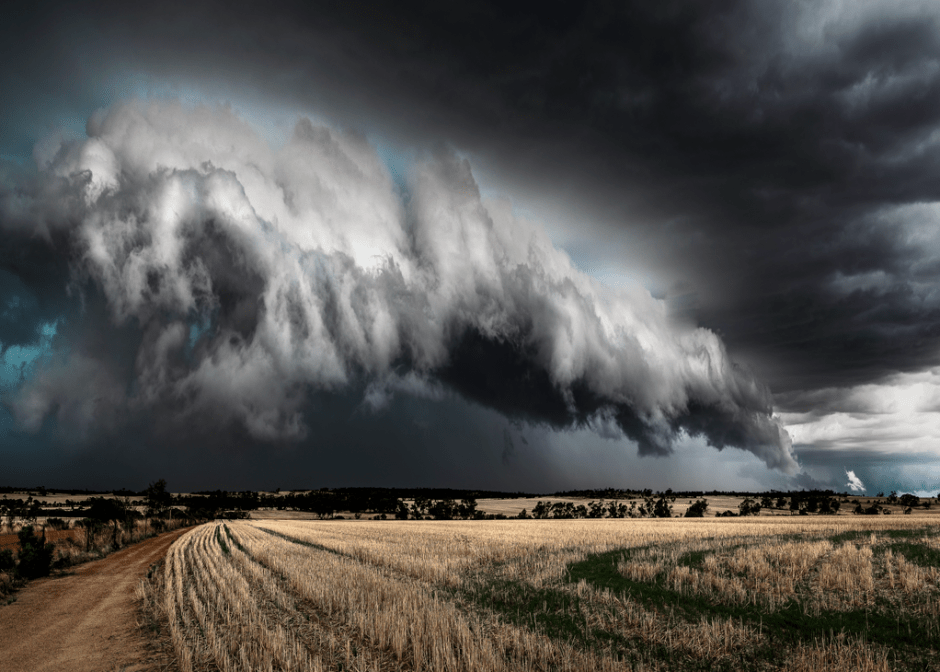
11 storm

To make my life more complicated, as well as doing GloPoWriMo I’m also participating in #TheDirtyThirty2020 (hey it’s not like there’s anything else going on ATM right). Every day they offer specific prompts. Today, Day 11 is #haikuday. & so, in the interests of my mental health I’m doubling up today’s poems. The haiku I wrote for Dirty Thirty I’m also using for today’s pandemic poem.

*****

storm

garden sunshine spreads : grey cloud curves overhead — the world changes in an afternoon

Day 10 – this I believe to be true

Respect and pray on nature background

As well as writing several poems every day, I’m reading at least one book of poems a day too. A couple of days ago I read little known Portugeuese poet Fernando Pessoa’s Selected Poems. He frequently uses Petrarchan sonnet structure & I was admiring how nicely those poems hung together. When I was trying to work out how to format the initial blurrrgh of ideas spewed out in the first draft, I was surprised to notice I had (apart from 2 lines in the wrong positions) written a miniature one of my own. Sans rhyme. Which is a good reason why poets should read other poets’ poems.

It’s always funny how you start off with an idea of a poem is going to go, only to watch it veer away from you. Funny, but exciting too. This one came pretty quickly … & is perhaps the one I’m happiest with so far this GloPoWriMo.

*****

the fidesvirus

not all pandemics
start in wet markets
or an insect’s sting
or a species-jump

& they don’t spread
by sneezing or particles
left on a hard surface
or in the blood stream

they are created by us
disseminated by us
& they infect only us

& regardless of conviction
— none are protection from
a truly committed pathogen

Day 09 – have trade will travel

ESY-032331823 - © - jc_cards

There’s more verses half written for this poem, but I couldn’t work out where they should go. This is a WIP.

*****

Homo economicus

for over 40 years free trade has been touted
as the solution to all social & economic ailments
— trade is really code for countless uninvited invaders

the Chinese went to Africa for sorghum
brought back camels then used them to establish
one of the greatest invader routes ever — The Silk Road

Columbus traded (if that can be the term)
European disease for New World gold — yet
smallpox, measles & tb killed more than sword or gun

hitchhikers today hijack the best transporters
money can buy — shipping containers which daily import
thousands of animals, insects, microbes & diseases to ecologies

ill-equipped to deal with them — because profit is paramount
& preventing illegal human immigrants is far more pressing

Day 08 – recipe for mourning

08-tuna-mornay

I’ve been saving this idea for a day when I was low on energy & creative juices. Sadly I was hoping it would be a little later in the month. That said, it’s tough churning out a poem a day even when 100% healthy: to do so while ill is an added challenge.

It’s definitely an unusual “poem” … a cross between a recipe & a list poem … with, I hope, an unexpected sting in the tail.

recipe for tuna mournay

Part 1:
Ingredients

1. Fish
common
anchovy, barracuda, grouper, flying fish,
cod, common sea horse, king mackerel,
Spanish mackerel, common sea bream, 
colourful
white marlin, grey triggerfish,
blue runner, rainbow runner,
black gemfish, bluefish, red drum,
greater amberjack, black ruff, yellowtail,
named for other things
sailfish, swordfish, lancet fish, puffer fish,
goosefish, porcupine fish, monkfish,
sunfish, pilotfish, dolphin fish, needlefish,
spurdog fish, Cuban dogfish,
longbill spearfish, bigeye cigarfish, stone bass,
strange
Bermuda chub, opah, escolar,
leerfish, tripletail, Murray eel,
pomfret, bigeye thresher, wahoo,
bonito, cassava fish, spotted skate,
manta ray, devil ray, 
shark
bignose, hammerhead, Galapagos,
sandbar, night, sand tiger,
copper, blue, (great) white, mako

2. Reptiles
turtles
loggerhead,  leatherback,
green, hawksbill, Kemp’s ridley 

3. Mammals
whales
northern right, pilot, humpback,
beaked, goose-beaked, killer,
sperm, minke, sei, fin,
dolphins
common, striped, spinner,
Atlantic spotted, bottlenose,
harbor porpoise, 

4. Birds
albatrosses
Atlantic yellow-nosed, black-browed,
northern royal, shy,
gulls
yellow-legged, great black-backed,
herring, laughing, Audouin’s,
shearwaters
balearic, great, sooty, Yelkouan,
petrel
great-winged, grey, southern fulmar, 

Part 2:
Instructions

this is
a not-so-quick list
of some of the 145 species
regularly killed & discarded
while “fishing” for tuna
charmingly known
as by-catch

*List taken from Jonathan Safran Foer’s Eating Animals

Day 07 – the obsession that’s eating our planet

07 Doutielt3

One of the things I hope to do over this month is come at the theme PANDEMIC from a range of angles. Looking at, if possible, a little like a cubist Picasso painting where we can look at all sides of the subject at once. It’s still a bit stat heavy but this poem really is about the big elephant in the room. (Not it’s not really an elephant.)

*****

plague species 

a mere ten millennia ago when we first
trick tamed cattle from wild aurochs
humans & those critters that would become
our domestic buddies (cows, chickens, pigs, sheep)
represented around 1% of earth’s biomass
wild animals (using the most basic maths)
represented 99% of all living creatures.

now humans & the beasts we own as pets
property or product are somewhere
between 96-98% depending on the study cited.
basically earth has been stolen from free-living
animals for those species we most love to pat
but even more so for those we lust to eat.
the plague has spread — & continues to …

Day 06 – close to home

Red V big

Not much explanation needed tonight.

*****

hypochondranoia

in these anxiousladen : hypertensile times : over doctor googling : affects mental health : almost more than any virus : attacking flesh

a pre-exisiting history of weak lungs : can’t account for : this shortness of breath : when walking : into the next room : to make another cuppa ; every whimpered cough : bubbling up like lukewarm lava ; the-not-quite-hot : but-definitely-warmer-than-bugsnug : flushes ; the soft aches of exhaustion : in every cell ; the intermittent bouts : of nowhere-near-migrainial misery : but discombobulating enough : to warrant frequent napping ; all adds up : to not quite anything 

simultaneously : not wanting to : over-react : read too much into it : complain : cos it’s probably nothing : don’t want to : over-whelm : the local medical centre : probably : just a hangover : from last month’s laryngitis : after all : other than living in a : designated cluster area : what chance has there been : to jump on : this global pan-wagon