Day 25 — poets + soldiers

The theme of “reading” overlayed on “Anzac Day” works well. (Particularly poetry.)
The Poetic Factoid poem kinda explains the rationale behind today’s main poem.

*****

The Boy From Eden Valley 
by g.r. “ukelele” jones

There was stillness in the trenches, for the word had passed along 
That the call to take Lone Pine had been made,
And even though they’d tried before & all knew it to be wrong
Orders from the top couldn’t be belayed.
All the tired mud-coated soldiers from units near and far
Had gathered one by one across the line,
For though the boys would much prefer to stay where they are,
No body was willing to be left behind.

There was old Harrison, now a long way from a pup,
An old man with white snow dusting all his hair;
But few could fight beside him when his blood was fairly up
He would go wherever his countrymen would dare.
Clancy of the Overflow too had volunteered to serve,
No better rifleman ever held a gun;
For no man would ever say that Clancy had no nerve,
He learnt to shoot under the hot Australian sun.

And one was there, a youngster who’d lied about his age,
He was scrawny like a chicken undersized,
But oftentimes there’s a touch of angry eagle – impossible to gauge
And as such unexpected heroes are disguised.
He was hard and tough and wiry – just the sort that won’t say die
There was courage in his quick impatient tread;
And he bore the badge of gameness in his bright and fiery eye,
And the proud and lofty carriage of his head.

But still so young and weedy, one would doubt his power to stay,
And the captain said, “Sorry, son you’ll never do
For a dash cross no man’s land, you’d better stop away,
That wasteland is far too dangerous for you.”
So he waited sad and wistful – only Clancy stood his friend
“I think we ought to let him come,” he said;
“I warrant he’ll be there with us when we all reach the end,
For he is from the hills and is Barossa bred.

“He hails from Eden Valley, up by Kaiserstuhl’s side,
Where the hills are twice as steep and twice as rough,
Where a horse’s hoofs strike firelight from the flint stones every stride,
The man that holds his own there is more good enough.
And the Eden Valley cobber is a special kind of tough,
Where the dry creek runs those granite hills between;
Outwardly gruff maybe, but inside the right sort of stuff,
And nowhere yet such comrades have I seen.”

Although he did not understand the reason for this tussle, 
World politics was low priority back on the North Rhine, 
The boy from Eden Valley stood stock still not moving a muscle – 
Thinking: I intend to make the Lonesome Pine mine
Through the stringybarks and saplings, on the rough and broken ground, 
Up the hillside at a furious pace he went; 
Promising not to lower his rifle till he arrived safe and sound, 
Working his way up that tricky ascent.

He was right among his mates as they pushed up the sloping hill, 
While bodies all around dropped like flies, 
A blind fierce fever overcame him propelling his legs still,
He wanted none to see the terror in his eyes. 
Then they lost him for a moment, where two gullies met 
While he was ten thousand miles away remembering  
Dim distant hillsides where the vines would not be budding yet, 
Where all in Eden Valley were waiting for spring.

A season he would never see again, nor turn his head for home
Alone and unassisted he’d not be coming back. 
For two bullets pierced his chest, the holes gaped with bloody foam. 
And like a wounded bull he fell upon the track, 
And the bugles all did blare retreat, not that many heard, 
Blood and bone from man & boy covered now the spur; 
Dead and wounded strew the ground, cries for help were slurred, 
And in the dust his vision began to blur.

Now down by Gallipoli, where the pine-clad ridges rise 
Their torn and rugged battlements on high, 
Where the air is clear as crystal, and the white sun burns your eyes 
At grey dawn in the cold and frosty sky, 
And below The Nek where the Aegean does sweep and sway 
From Homer’s winedark sea the miles are far and wide, 
The man from Eden Valley is a household name today, 
But we still lament that damned stupidity, the reason that he died.


*****

Day 25 Factoid — Banjo was a soldier & a poet

poet soldiers

i.
Banjo was a popular poet
who for twenty years prior
romanticised bush life
representing those
“outback” as tough
independent  heroic
yet  laconic underdogs
qualities many soldiers 
wanted to reflect

A&R published his poems 
in pocket editions designed 
to fit in Anzac tunic pockets
the perfect gift for 1917s 
cultured ‘man in the trench’
poems like Mulga Bill’s Bicycle 
The Man From Snowy River 
were read &/or recited 
by the diggers to sustain 
their spirits with “feelgood” 
humorous yarns from home

ii.
i don’t buy the bullshit 
WWI & those who fought 
forged our modern Aussie DNA
on those fabled battlefields
but i wholeheartedly believe 
they gave their naivety
& their innocence 
                                      for country
some gave their bodies, 
some their minds; many their lives; 
but all had their optimism 
their gungho patriotism 
brutally crushed by tanks
blown apart by artillery 
ripped into shreds by shrapnel 
strafed by machinegun fire
choked by poison gas
decimated & dismayed 
by the scale of carnage
inhuman conditions & 
idiotic leadership 
from too many 
in positions of power

& as such deserve our care
& eternal compassion
Day 25 — declaration & current live conflicts

How many Anzac Day poems can I write during NaPoWriMo? The theme of “climate change” overlayed on “Anzac Day” is challenging. I like the poem. It’s a first draft. My brain is pretty much fudge. 

And the Poetic Factoid poem that was gonna be wow-kapow! short & simple … has ballooned out of control & may now be the beginning of a suite of 28 poems. Though not tonight. 

*****

declaration

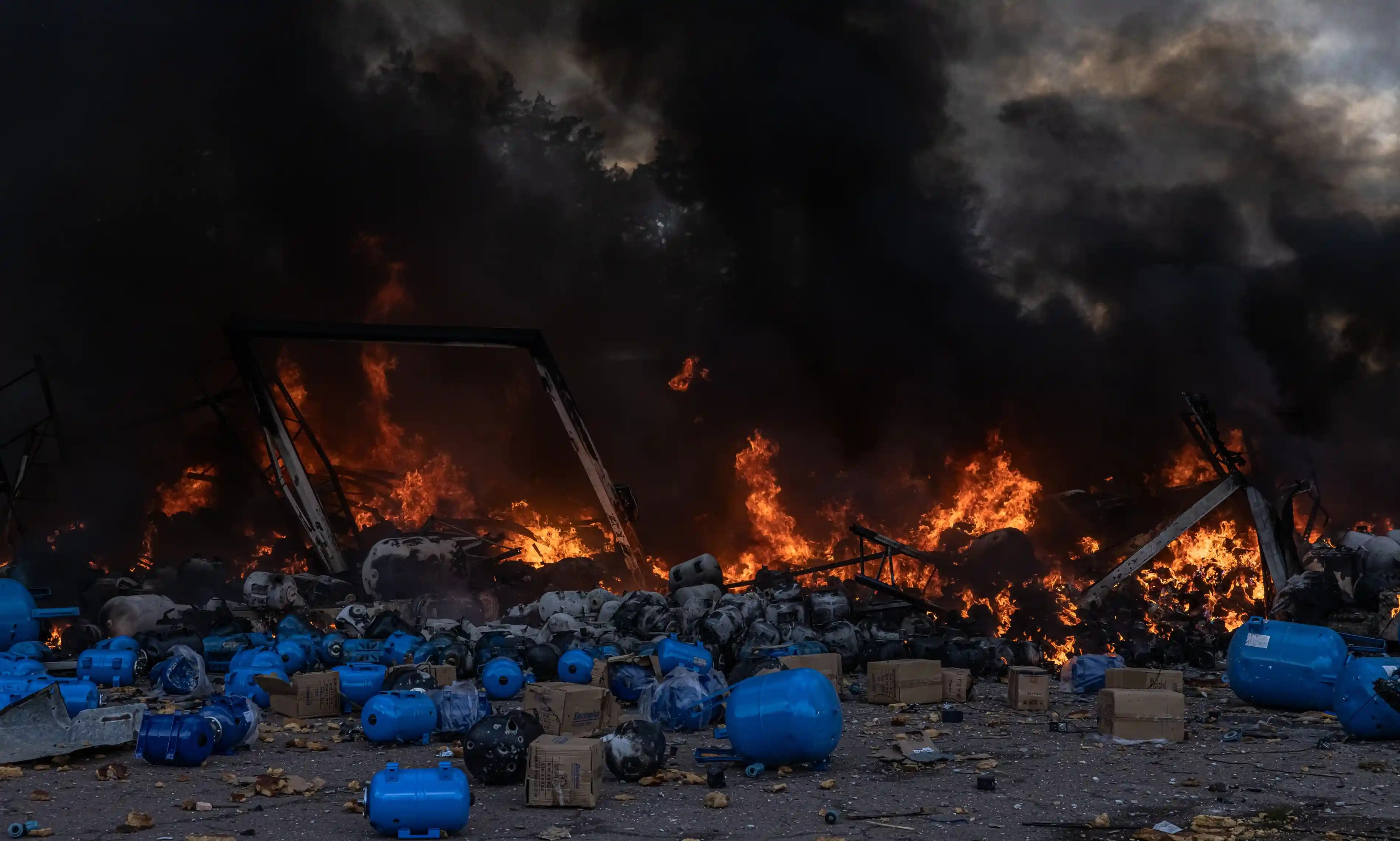
By continuing to megalomaniacally pursue 
corporate profit over planetary health 
fossil fuel companies have declared 
(& are continuing to declare)                    ! War !
with every new extreme extractive 
project they announce using
ever riskier technologies

They are declaring  ! War ! on the arctic 
on the Amazon, on Antartica too before long 
! War ! on far off out-of-the-way places
on our own backyards

! War ! on the oceans (in countless ways)
on freshwater supplies everywhere
rivers, groundwater, aquifers 
on our drinking water
on the atmosphere

! War ! 
on nature
on trees, forests, wetlands
on every living creature

on us

they have declared  !! WAR !! 

only we — refuse to admit — they have 

*****

Day 25 — TIL about the 28 LIVE conflicts in the world right now
(20 odd more than I presumed)

too many conflicts 

1. The Argument 
as we solemnly remember our participation 
in wars dating back 114 years plus
it’s probably productive to pause a moment
& realise there are currently 
28 live conflicts around the world
                                                         right now

some you will have heard of 
israel’s annexing of palestine perhaps
russia’s invasion of ukraine
syria, afghanistan, myanmar, iraq
et cetera et cetera et cetera 

my initial concept for this poem
was to write haiku length
potted histories of 5 or 6 
current conflicts in the world — this before
realising there were so so many

i mean i thought i was relatively 
up to date with what’s going on. 
i wasn’t. i would’ve score half. on a test.
maybe. but this poem is already too long
so instead all i’m going to do
is list all 28 conflicts. as they appear.
on the global conflict tracker website
& request you to take the time
to read each one. perhaps even
visit the site to learn more.  

(& keep your eyes out, for my
potted history suite, forthcoming)

2.
i. Americas
Criminal Violence in Mexico
Instability in the Northern Triangle
Instability in Haiti
Venezuela Crisis

ii. Asia
Instability in Afghanistan
Territorial Disputes in the South China Sea
North Korea Crisis
Instability in Pakistan
Conflict Between India and Pakistan
Confrontation Over Taiwan
Civil War in Myanmar

iii. Europe and Eurasia
War in Ukraine
Nagorno-Karabakh Conflict

iv. Middle East and North Africa
Conflict in Syria
Instability in Iraq
Instability in Lebanon
Conflict Between Turkey and Armed Kurdish Groups
Israeli-Palestinian Conflict
Civil Conflict in Libya
War in Yemen
Civil War in Sudan
Violent Extremism in the Sahel
Confrontation With Iran

v. Sub-Saharan Africa
Conflict in the Central African Republic
Conflict in the Democratic Republic of Congo
Instability in South Sudan
Conflict With Al-Shabaab in Somalia
Conflict in Ethiopia

Day 25 — make love not war (3 for the price of 1 today)

For once, I don’t feel conflicted about writing an Anzac Day Poem. And as happened 2 days ago with Bill Shakey Day, (& last year for both days) having a superimposed theme (“love” this year, “climate change” last) made me look at the day in a whole new way — which in turn has generated not 1, not 2, but 3 poems of which I am exceedingly pleased. 

Looking at love in war time is a wonderful way to get around the whole uncertainty I have about A25. 

It’s also a lovely way (pun intended) to honour, commemorate, call what you will my grandparents in poetical form.

*****

Anzac Triptych
1. Atherton Tablelands 
2. Goodbye Will Moon
3. TIL


*

1.
Atherton Tablelands

In April 1943 following three weeks leave after seeing action at Tobruk, Mersa Matruh and El Alamein Gunner RL JONES of the 2/7th Field Regiment arrived at Kairi in the Atherton Tablelands.

It was love at first sight.

Even though he was from 
a notoriously lush part
of the Adelaide hills the green 
in Far North Queensland 
is several degrees greater 
than most mortal eyes 
are used to — or able to endure.

Gunner RL Jones remained 
on the Tablelands with his unit
for almost two years — training
and playing upon the rich red 
loam born in ancient volcanoes.
Before being sent to Tarrakan 
that began the Allies’ Borneo 
Campaign. He survived those jungles 
by thinking often of the equally 
lush Atherton tablelands — 
until the Americans blew up 
the world and the war ended.

Gunner RL Jones eventually 
made his way home & made
Florence his fiancé.

Rueben told Florence. 
Of the green.
Of the red soil. 
Of his desire to move there.

Florence said no. 

He never saw the Tablelands again 


*

2.
Goodbye Will Moon

In late 1944 Corporal BI Burgan of RAAF 1 Squadron was likewise on leave when he visited his parents in Port Wakefield.

Quiet Sunday evening.
Parents off praying.
It’s been a long journey 
and I’ve only a few precious
day’s leave. But I know
dad will be disappointed
if I don’t attend. So 
although I don’t feel like it
reluctantly walk across town.

Only one seat remains 
in the very back pew.
Slide into that space next 
to a beautiful young woman
who smiles as I sit down.
Can’t concentrate. On 
what the pastor is saying.
Nor the service itself.
Nothing but —
that sublime smile.

Afterwards, I offer to walk 
her home and am bemused 
and delighted to discover 
she’s boarding with our next 
door neighbour.

We stand talking for ages
til I brazenly lean in
and kiss her over the garden gate.
I’d best go in now, she says.

The best night of my life.

During my leave we spend 
as much time as possible
together but it ends
all too quickly. Before I 
deploy to New Guinea 
I must tell her. I confess
undying love. The hammer 
blow. She’s engaged to another!
I didn’t know I say 
and chivalrously
offer to step aside. 

Leave it with me.
She says.
I’ll deal with it.

And. She. Did.


*

3.

TIL

today i learnt 
that unlike my
gran and grandad
nana and papa 
weren’t engaged
or even dating 
while he was away 
during the war
they only started 
seeing each other
after he got home 

her first  love 
     died     flying   bombers
over    germany 
   she       was                s h a t t e r e d
when   Will    was  
                                     killed 


suddenly saw my frail
ninety nine year old nana
       with  newer 
    sadder  eyes

Day 25 — the actual war to end all wars

As always, Anzac Day crops up as a potential topic during NaPoWriMo. I’ve written before how this day is a conflicted one for me (see previous Anzac Day poems for more, particularly last year’s addition to the oeuvre). And as with two days ago (Bill Shakey Day) having the theme of “climate change” superimposed over “Anzac Day” initially flummoxed me. Until this idea presented itself, which in my opinion, solved the conundrum perfectly.

*****

the actual war to end all wars

sure we’ve trounced off to battle 
like it’s some sort of boy’s day out-
church picnic-gungho adventure-what!

just because the mother country demanded it
when her monarch couldn’t solve a tiff
with two of his cousins

yes we’ve fought proper wars against fascists 
& communists & nazis & people who believe 
different silly things to our silly things

& tragically, traditional custodians of our own nation 
— enemies real but more often fabricated 
to serve the current political narrative

wars which we endlessly celebrate 
in often mawkish, sometimes trite, 
occasionally deeply moving ways

but our biggest battle is all around us
yet most cannot see the war being waged
funded every day by billions of dollars

from multinational companies who believe
their right to profit outweighs a home
habitable by all — humans & animals alike

Day 25 — big dates raise big issues

25 Rosemary.jpg

As always, Anzac Day is highly conflicted for me. I had two grandfathers who served in WW2 in North Africa, the Middle East & Papua New Guinea & who thankfully both came home. I had a great grandfather & a great great uncle who fought in the trenches of France & one came home & one did not. I had another great grandfather who served with the Light Horse in Egypt & Palestine. He also came home. So the Anzac mythos is strong on both sides of my family. It is personal. However, at the same time, I find much of Anzac Day tokenistic* & backward-looking.  See below for my reasoning.

*Though there is something very communal & positive about the #AnzacAtHome & #DrivewayAtDawn movement as a result of COVID-19 which I like immensely. Perhaps this could be one of the ways forward, followed by street parties all over the country.

*****

the Anzac spirit

beware: today’s the day you’re most
likely to catch Anzacspiritus flu
an insidious disease that claims men
fighting on Gallipoli beaches
& trenches of the Western front
somehow forged our young nation’s
nature with five distinctive qualities:
mateship, humour, courage,
ingenuity, & endurance.

my perennial question —
how 256,000 men who rarely
spoke of their experiences
influenced the entirity of Australian
society’s then five millions
                          remains unanswered.

that said, i don’t begrudge a nation
built on these tenets
they’re a reasonable list — though
you wonder if they’re not in fact
lacking somewhat. maybe: compassion,
cooperation, freedom, security & equity
                                    could be added.

but instead of simply praising them
this one day of the year
let’s actually live by them.

there wasn’t much mateship going round
when toilet paper was being hoarded
& supermarket shelves stripped;
nor courage when it came to attacking
fellow citizens simply because they look
like where our current virus is from.
thankfully though our GSOH
has been highly evident through countless
memes, TP workout routines, etc.

my request is — if any politician
from the Prime Minister down
to your local council member
wants to cash in on the gungho glory
of Anzac then they need to spread
those five+ tenets to every decision
they make throughout the year.

let’s start using our brave, heroic,
foolish, flawed Diggers never ending
sacrifices to heal, to look forward,
                            instead of always behind …

Day 25 – reasons (& relations)

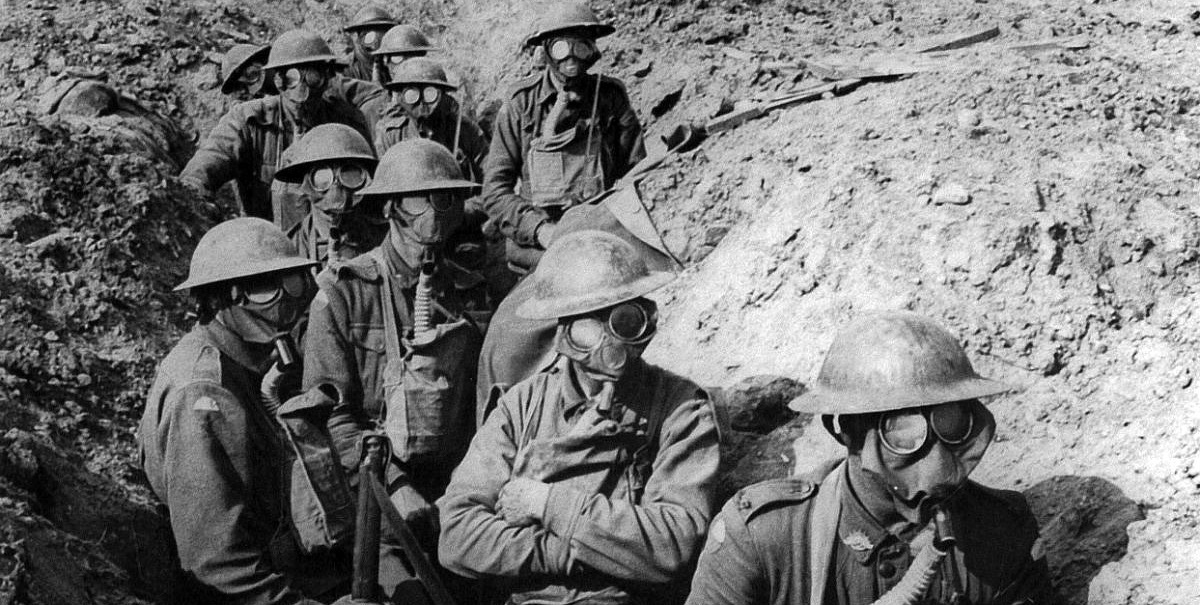
25 australian_infantry_small_box_respirators_ypres_1917-awm.jpg


Because Anzac Day always falls during NaPoWriMo, I often myself writing about it owing to my many & varied (often conflicting) emotions about it. I think I could quite easily publish a chapbook of just Anzac Day-themed poetry. 

Once again, this is not the poem I set out to write, that one remains half completed needing more time & more research to complete. It is conceivable that parts or all of this poem may one day make their way into that more encompassing piece.

*****

Lest we forget

i.
When Cousin George
declared war
against Cousin Wilhelm
in August 1914,
13 year old Australia,
a British Empire dominion
was likewise at war
— automatically.
We had no choice.

ii.
While many thousands of young
men eagerly rushed to enlist;
thinking it a grand adventure
to assist three spoilt imperial cousins
squabble over colonial interests;
Australia twice voted against conscription
as political parties split & formed new
alliances, elections were fought
& a Prime Minister resigned over
the contentious issue of our involvement.

iii.
60,000 Australian diggers
were treated for venereal diseases —
almost as many who were killed.

iv.
When the war was over
thousands of thousands of men
many with debilitating physical
wounds: torn limbs, gas-burnt lungs,
missing eyes, metal-sliced flesh;
as well as those enduring
post-traumatic stress disorder
back when it was much more
poetically named shell-shock:
the warhorror of bursting bombs
mates exploding next to you,
then days in the trenches
alongside their rotting corpses,
had to be re-integrated into a society
revulsed at the monumental destruction,
keen to resign the war (& too often
those symbols of it) to the past
& attempt to resume normal life.
Many soldiers kept their war silent.
But many of those did not
  or could not
                        make the transition.


BONUS POEM: April 25, 2018

In France. In V-B. 100 years on.

*****

Idols

for many windswept years
it’s been our special story
entrenched in lore & legend

my grandfather’s uncle
his father’s younger brother
guts unpacked by a MG bullet

killed in the battle
to retake Villers-Brettoneux
early morning, Anzac Day 1918

however today I met three
families with the same story
all blood drained from it

like a carcass on the hook
plus the bone dry testimonies
of half a dozen more

which has simultaneously
made our special day
less  & a little more   so

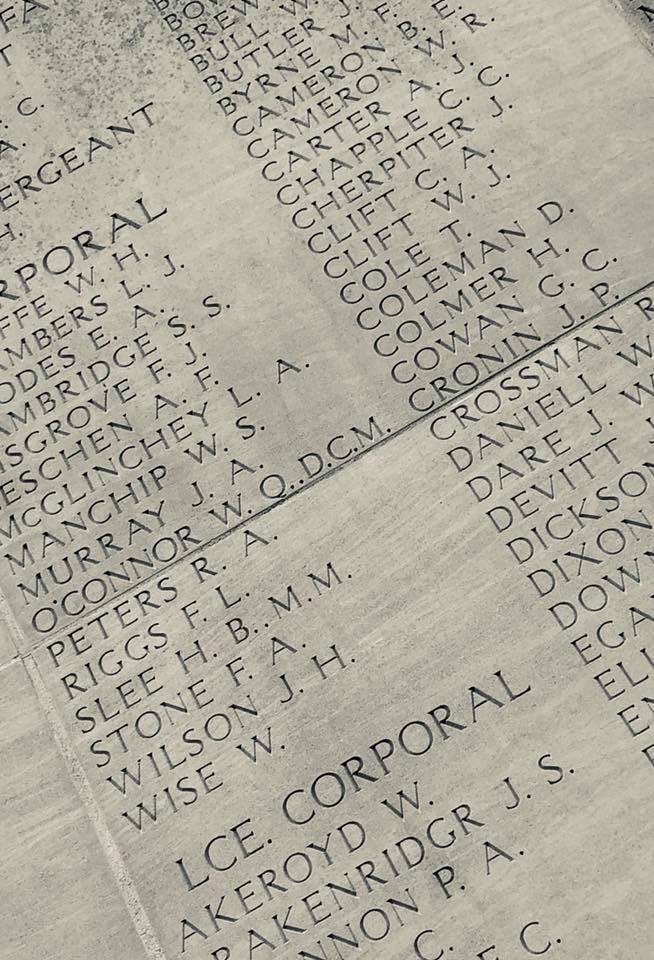
25b vb names.jpg

Day 25 – poem about peace

cow-in-poppy-fieldCROP

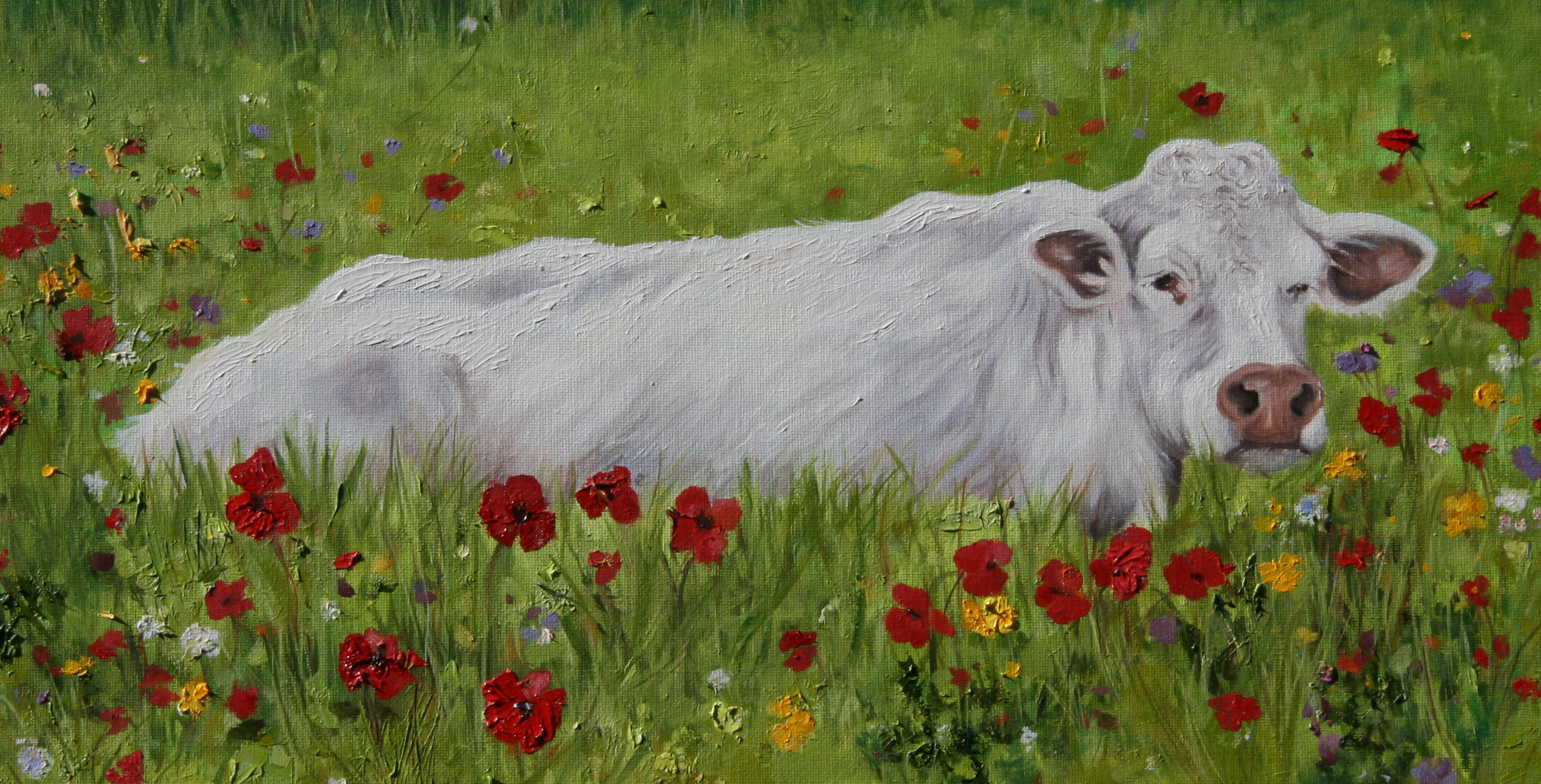
Today is always a day of conflicting emotions for me. Been trying to resolve my attitude towards it for 25 years. This is one of the pomes that came out after percolating about it all day. I’m happy enough with it. Hope my googleTranslate French is accurate.

Voix parmi les vaches

All I’ve heard for a long time now
is French farmers calling their cows.
It’s a musical enough language
& everything sounds more beautiful;
but I do miss the Aussie drawl
And the sky over this western front
Is no where near as big as
the west where I was once from.

The sun has gone down.
All my comrades have grown
old, gone beyond. Joined me,
in their way. So let us sleep.
We are grateful for your thoughts
but our graves no longer want
or need your remembrances.
You offer us a minute of silence.

Let’s try it for a century,
see if we can let it all just, settle.


NB Very hitech technicalised tech issues meant I was unable to post yesterday’s NaPoWriMo post as intended. About quarter to twelve with the image chosen, the bulk of the text typed into this blog & most of the miscellaneous tags & faff taken care of, I was suddenly unable to type anymore: turns out the rechargeable batteries in my wireless keyboard had gone flat & being the organised soul I am, I had neglected to backup charge any for, oh some weeks…


Day 25 – The Year of One Day

Today is a controversial day for many. But it’s been good to me. The past 2 years now, I’ve got good poems out of it. Today I re-read Alan Seymour’s “classic Aussie play” The One Day of the Year, about the changing face of Anzac Day in the 60’s. I haven’t read it since uni, & ironically while it has dated, many of the issues it explores are still ones that people argue about today.

I began with its last line (Last Line, Gone) & continued from there…

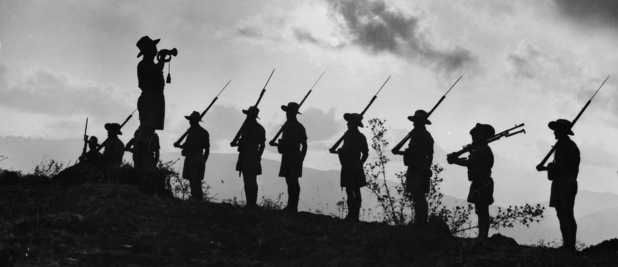
the last post

i.

love its haunting frail warbly wobbly squeaky somehow off-key, off-kilter
voice trying to be courageous to death’s face but never quite succeeding
forlorn melancholy brassy vulnerability half-farting battlefield bravado
but most of all the strange perception that no matter how well played
it always sounds like there’s a note wrong in there — somewhere

ii.

yes, it’s time to turn off the taps we’ve had our last warning
your duty is done your time is over your rest deserves peace

last postCROP

The last line of The One Day of the Year is: “i’m a bloody Australian & i’ll always …