The poetry volume I read today was On the Wire, assembled by friends of Adelaide poet John Pfitzner (& one of my two fellow poets along with Rachael Mead in New Poets’ 17) after his death. In that collection there’s a poem called “Sacred Place”. I combined this theme/idea with a NaPoWriMo prompt from a few days ago which I’ve been keen to try. It’s a form poem & I always like to do at least a couple of them during this month especially if I’ve never written one before. The form & idea seem to blend very well.
The ghazal originates in Arabic poetry, and is often used for love poems (especially spiritual/divine love). Ghazals commonly consist of five to fifteen couplets that are independent from each other but are nonetheless linked abstractly in their theme; and more concretely by their form. In English ghazals, the usual constraints are that:
the lines all have to be of around the same length (formal meter/syllable-counts are not employed);
and both lines of the first couplet end on the same word or words, which then form a refrain that is echoed at the end of each succeeding couplet.
Another aspect of the traditional ghazal form that has become popular in English is having the poet’s own name (or a reference to the poet – like a nickname) appear in the final couplet.
The Poetic Factoid came out of a google concerning THE Most Sacred/Holiest Books, of which oddly, there was little consensus.
*****
sacred spaces: a ghazal
my 4 poster bed was chosen cos it also holds books
softest safest sublimest place i know to read books
air chairs under ancient elms float light as words
drift in & out of wispy worlds as i read books
Dorothea’s wingtip chair by the window more
a chairshelf ATM but where i’ve often read books
outdoor setting made from an old oak barrel
there beneath the silver birch i read books
north-facing scorched wide-armed wooden bench
in autumn setting sunshine i love to read books
beautiful bench of ceramic fish in the shade
an elegant corner to stay cool & read books
— the truth is every space becomes sacred
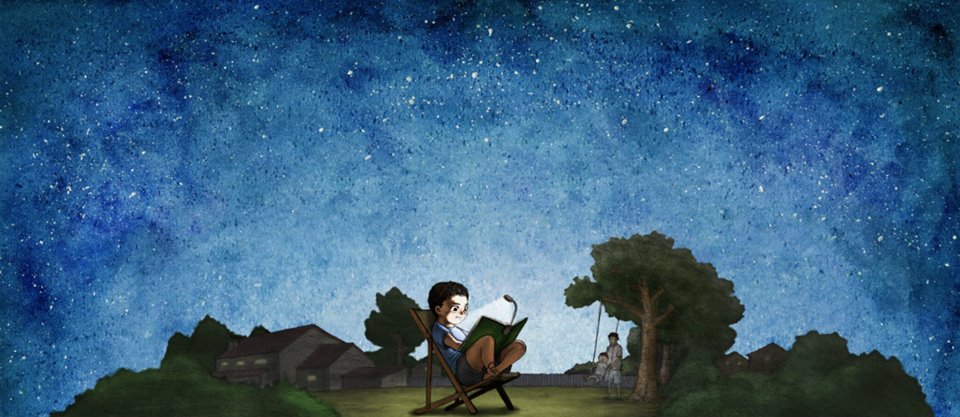
every time gareth takes out one of his books
settles in & experiences the miracle of reading
*****
Day 11 Factoid – Holy Books
most holey
google ain’t too definitive
regarding the holiest book
there are a few frequently
mentioned contenders
Christianity’sBible(Old&NewTestaments)Islam’sQuranJudaism’sTanakh&TalmudHinduism’sBhagavadGita
VedasUpanishadsPuranasBuddhism’sTripitaka(PaliCanon)Sikhism’sGuruGranthSahibTaoism’sTaoTeChing
Jainism’sAagamConfucianism’sAnalectsShintoism’sKojikiNihonShokiZoroastrianism’sAvestaBaha’iFaithth
eKitábiAqdasKitábiÍqánScientology’sDianetics&TheLatterDaySaints’BookofMormonAnotherTestamentofJ
esusChristakaAnAccountWrittenbytheHandofMormonuponPlatesTakenfromthePlatesofNephi
among others
a lot of work working out the best one
my suggestion for a smaller list
Cosmos. Carl Sagan. The. End.
 gareth roi poet boi